English
 中文简体
 Español
 Português
 Deutsch
 русский
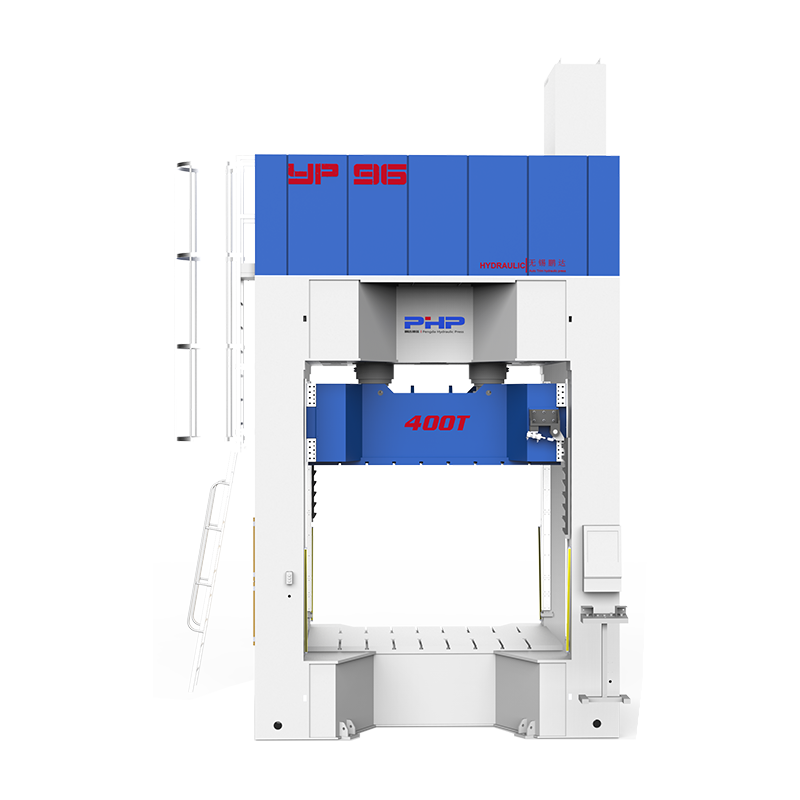
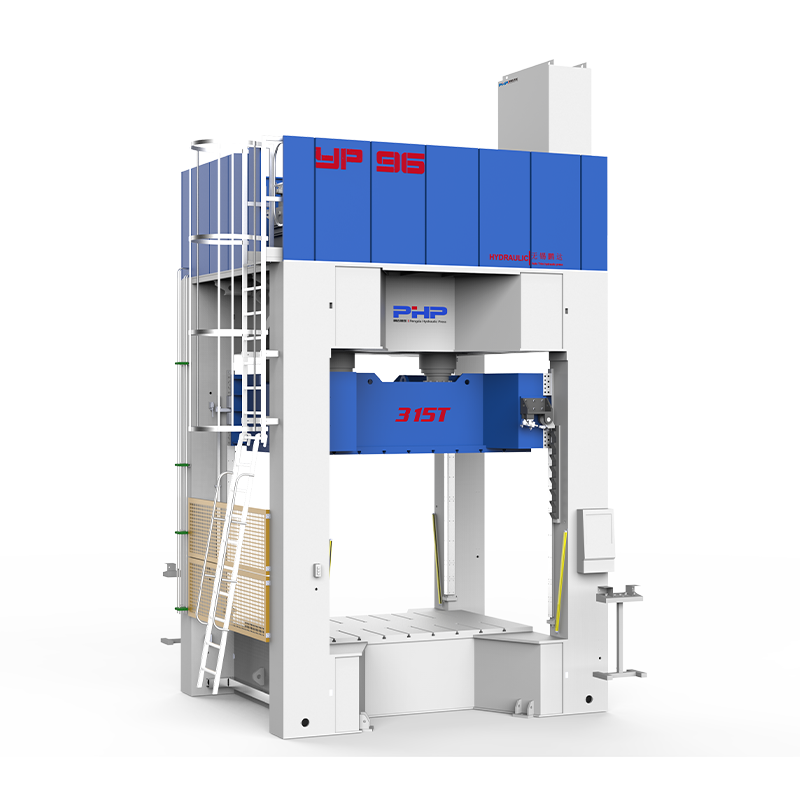
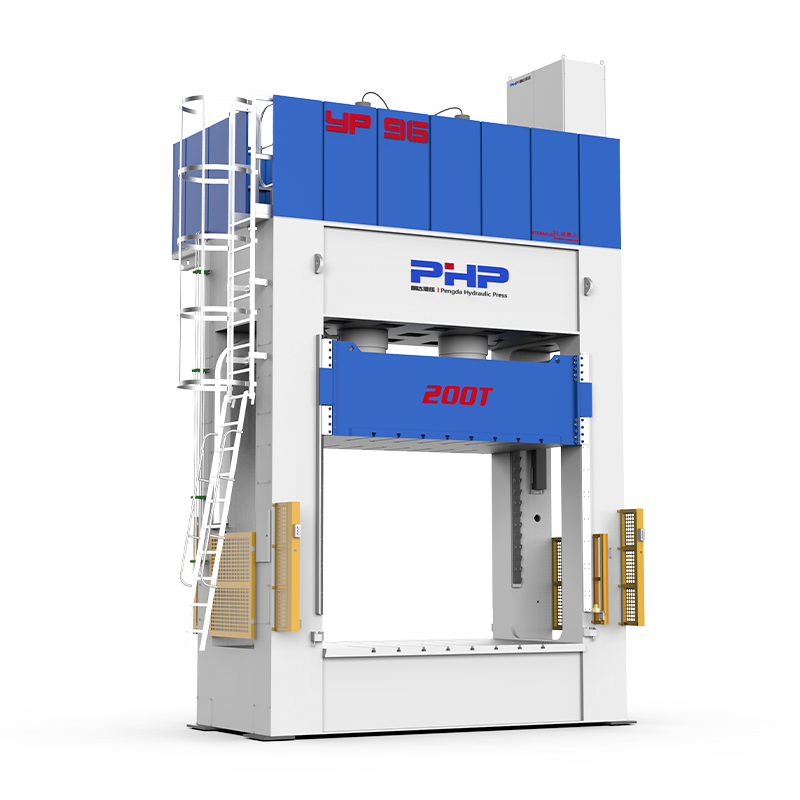

SMC Press Structural Engineering
Large SMC parts require more than sufficient hydraulic press tonnage. As platen dimensions, mold size and molding force increase, the elastic behavior of the press structure becomes increasingly important.
A press can generate the required molding force without permanent structural damage and still deform enough under load to influence mold geometry, platen parallelism, flash, thickness consistency and process repeatability.
Content
- 1 1. Press Tonnage and Press Stiffness Are Not the Same Thing
- 2 2. Why Large SMC Parts Put More Demand on Press Stiffness
- 3 3. Strength and Stiffness Are Different Design Requirements
- 4 4. What Actually Deforms When an SMC Press Builds Force?
- 5 5. Vertical Stiffness and Angular Stiffness Describe Different Behavior
- 6 6. How Structural Deflection Changes the Loaded Mold Condition
- 7 7. Frame Deflection and Platen Deflection Are Not the Same Thing
- 8 8. Why Wide Platens Make Stiffness More Challenging
- 9 9. Static Parallelism Does Not Guarantee Loaded Parallelism
- 10 10. Off-Center Loading Places Additional Demands on Frame Stiffness
- 11 11. Higher Tonnage Can Make Structural Deflection More Important
- 12 12. How Frame Stiffness Can Influence SMC Part Thickness
- 13 13. Can Low Frame Stiffness Contribute to Flash?
- 14 14. Repeatable Deflection Is Easier to Manage Than Unstable Deflection
- 15 15. Hydraulic Control Cannot Completely Compensate for Structural Flexibility
- 16 16. Frame Architecture Influences Structural Behavior
- 17 17. How FEA Helps Evaluate Large SMC Press Structures
- 18 18. A Stress Plot Alone Is Not Enough
- 19 19. Practical Example: Same 2000-Ton Rating, Different Stiffness
- 20 20. How Applied Load Changes Elastic Deflection
- 21 21. What Should Buyers Ask About Press Frame Stiffness?
- 22 22. What Data Should Be Provided for Large SMC Press Structural Design?
- 23 23. Does an SMC Press Need to Be as Stiff as Possible?
- 24 24. Large SMC Press Stiffness Selection Checklist
- 25 Evaluate the Press Under Load, Not Only on the Nameplate
- 26 Large SMC Hydraulic Press Solutions from Wuxi PengdaHZ
- 27 Frequently Asked Questions
- 27.1 What is hydraulic press frame stiffness?
- 27.2 Is press stiffness the same as press tonnage?
- 27.3 Why does a hydraulic press deform under load?
- 27.4 How can frame stiffness affect SMC part thickness?
- 27.5 Can press deflection contribute to one-sided flash?
- 27.6 What is the difference between vertical and angular press stiffness?
- 27.7 Why is stiffness especially important for large platens?
- 27.8 How does off-center loading affect press stiffness requirements?
- 27.9 How is hydraulic press frame stiffness evaluated?
- 27.10 Is the stiffest possible SMC press always the best choice?
1. Press Tonnage and Press Stiffness Are Not the Same Thing
Press tonnage describes available forming force. Press stiffness describes the relationship between applied load and the elastic deformation produced by that load.
Press Stiffness = Applied Load ÷ Elastic Deflection
C = F ÷ δ
where:
- C = structural stiffness;
- F = applied load;
- δ = elastic deflection.
Two presses may both be rated at 2000 tons but show different elastic deformation when operating at the same production load.
Rated Tonnage How much force can the press produce?
Structural Stiffness How much does the machine deform under that force?
Maximum force capacity alone does not describe the loaded geometry of the machine.
2. Why Large SMC Parts Put More Demand on Press Stiffness
Large SMC components commonly require wider molds, larger platens and higher total molding forces than smaller parts.
These applications may combine:
- large projected molding area;
- wide platen spans;
- high total force;
- heavy tooling;
- asymmetric cavity geometry;
- greater potential for off-center loading.
Larger Mold→Larger Platen Span+Higher Force→Greater Deflection Challenge
A large composite press therefore cannot simply be treated as a smaller press enlarged proportionally. Structural load paths, platen reinforcement, frame sections and guide arrangements become increasingly important as machine scale grows.
3. Strength and Stiffness Are Different Design Requirements
Strength and stiffness are often discussed together, but they answer different engineering questions.
Strength
Will the structure survive the load?
Strength concerns stress, yielding, fatigue and structural failure.
Stiffness
How much will the structure move?
Stiffness concerns elastic displacement, rotation and dimensional stability while the load is applied.
A press frame can be strong enough not to fail but still be too flexible for the required molding accuracy.
This distinction is especially important for large SMC components where relatively small structural movements can influence a wide mold surface.
4. What Actually Deforms When an SMC Press Builds Force?
The mold does not operate inside an infinitely rigid machine.
When hydraulic force builds, several parts of the load path can elastically deform.
Cylinder / Ram↓Upper Structure↓Moving Platen↓Upper Mold↓Lower Mold↓Lower Platen / Bed↓Frame / Foundation Load Path
The total machine response therefore includes the combined elasticity of:
- crossheads;
- frame members;
- moving platen;
- lower platen;
- columns or tie structures;
- guides;
- tooling;
- connection interfaces.
Press stiffness should therefore be understood as a system property rather than one plate-thickness number.
5. Vertical Stiffness and Angular Stiffness Describe Different Behavior
Large SMC presses need to resist more than simple centerline compression.
Vertical Stiffness Resistance to Compression Along the Main Load Direction
A centered load produces elastic movement through the press structure. Higher vertical stiffness means less displacement for the same applied force.
Angular Stiffness Resistance to Tilt Under Eccentric Loading
When molding force acts away from the centerline, it creates a moment that tends to rotate or tilt the moving structure.
Vertical Stiffness ≈ Force ÷ Vertical Deflection
Angular Stiffness ≈ Eccentric Moment ÷ Angular Deflection
This distinction becomes important for asymmetric SMC molds, large panels and multi-cavity tooling.
6. How Structural Deflection Changes the Loaded Mold Condition
The mold may be manufactured to very precise dimensions, but its operating condition depends on how the press structure behaves under production force.
Molding Force→Elastic Structural Deflection→Loaded Mold Geometry Changes→Part Quality Can Change
Depending on where deformation occurs, this may influence:
- local mold gap;
- loaded platen parallelism;
- part thickness;
- flash distribution;
- dimensional repeatability;
- surface consistency.
Structural stiffness should not be treated as the only cause of these defects. Charge pattern, mold design, temperature, material flow and tooling condition can produce similar symptoms.
7. Frame Deflection and Platen Deflection Are Not the Same Thing
It is useful to separate overall frame deformation from local platen bending.
Frame Deflection Global Machine Response
Elastic movement of the overall structural load path, including crossheads, side members, columns or tie structures.
Platen Deflection Local Working-Surface Response
Bending of the platen itself under the actual mold footprint and load distribution.
A machine may have a very stiff frame while the platen still bends locally under a difficult load distribution. The reverse is also possible.
Press stiffness and platen stiffness are related, but they are not interchangeable specifications.
8. Why Wide Platens Make Stiffness More Challenging
Large SMC molds often require wide and long working tables. Increasing platen span increases the structural challenge because bending behavior becomes more important across the larger unsupported distance.
Platen design may therefore consider:
- plate thickness;
- internal ribs;
- reinforcement layout;
- support locations;
- load transfer into the frame;
- mold footprint and concentrated loads.
A larger platen should not be judged only by its length and width. Its behavior under the intended mold load also matters.
9. Static Parallelism Does Not Guarantee Loaded Parallelism
A press can show excellent platen parallelism when unloaded but behave differently when substantial molding force is applied.
Unloaded Condition Good Geometric Parallelism
≠
Measured with little or no molding force.
Loaded Condition Production Parallelism
Influenced by frame, platen and guide deformation under load.
This distinction is particularly important for:
- large mold footprints;
- high tonnage;
- off-center tooling;
- asymmetric cavities;
- tight part-thickness requirements.
A press can be geometrically parallel when unloaded and mechanically less parallel under production force.
10. Off-Center Loading Places Additional Demands on Frame Stiffness
Centered molding force primarily tests the vertical load path. Eccentric force adds bending and rotational effects.
Eccentric Force→Bending Moment→Frame / Platen Rotation→Uneven Mold Gap
Under these conditions, the machine may need sufficient:
- vertical stiffness;
- angular stiffness;
- torsional resistance;
- guide stability;
- multi-cylinder synchronization.
This is why allowable off-center load should be treated as a structural specification rather than assumed from rated tonnage.
11. Higher Tonnage Can Make Structural Deflection More Important
Buying a higher-tonnage press does not automatically reduce structural deformation.
Within a simplified linear elastic range:
Deflection ≈ Applied Force ÷ Structural Stiffness
δ ≈ F ÷ C
If structural stiffness remains unchanged while force increases, elastic deformation also increases.
Increasing force capacity without sufficient structural stiffness does not automatically improve molding accuracy.
In real machine design, the relationship is more complex than this simplified equation because different frame components, contact conditions and load distributions interact. Detailed structural analysis is required for final design.
12. How Frame Stiffness Can Influence SMC Part Thickness
Large SMC components may be sensitive to relatively small changes in loaded mold geometry.
If the machine structure deforms unevenly under force, local mold gap can change across the part.
Structural Deflection→Local Gap Change→Local Compression Difference→Thickness Variation
A repeating center-to-edge or left-to-right thickness pattern may therefore justify checking loaded machine behavior in addition to:
- charge weight;
- charge placement;
- mold geometry;
- temperature distribution;
- material flow;
- tooling deflection.
13. Can Low Frame Stiffness Contribute to Flash?
Flash can result from many process and tooling conditions, including excessive charge, high pressure, parting-line wear and inappropriate closing parameters.
Structural deflection can also contribute if it creates a larger local mold gap in a heavily loaded region.
Local Deflection→Parting-Line Gap Changes→Material Escape Path→Possible Flash Increase
This relationship is especially worth investigating when flash repeatedly appears in the same area and tracks with load distribution.
14. Repeatable Deflection Is Easier to Manage Than Unstable Deflection
Every real machine has some elasticity. The engineering goal is not zero deflection, which is physically unrealistic.
What matters is that deformation remains within an acceptable and predictable range for the actual mold and process.
Repeatable Behavior Same Load → Similar Deflection
A stable process window can be established around predictable machine behavior.
Unstable Behavior Same Load → Changing Geometry
Process consistency becomes more difficult and defect diagnosis becomes less reliable.
Predictable elastic deformation is easier to manage than unstable deformation.
15. Hydraulic Control Cannot Completely Compensate for Structural Flexibility
Modern hydraulic presses can control platen position, velocity and pressure with high repeatability, but control accuracy and structural stiffness are not the same thing.
For example, a position sensor can confirm the location of the measured moving component while the platen itself or surrounding structure still undergoes elastic deformation.
Position Control Controls Motion
Determines where the moving platen is within the machine reference system.
Pressure Control Controls Force
Determines how much hydraulic force is being generated.
Structural Stiffness Controls Elastic Response
Determines how much the machine geometry changes under that force.
For demanding large-part applications, all three need to work together.
16. Frame Architecture Influences Structural Behavior
Hydraulic presses can use different structural architectures, including four-column, straight-side, tie-rod and custom frame arrangements.
No frame type should automatically be assumed to be “stiff” or “flexible” based only on its name.
Actual stiffness also depends on:
- structural section dimensions;
- material;
- crosshead design;
- platen reinforcement;
- column or tie spacing;
- guide layout;
- joint design;
- load path.
Frame type influences structural behavior, but detailed design determines actual stiffness.
17. How FEA Helps Evaluate Large SMC Press Structures
Finite element analysis can be used during large hydraulic press design to evaluate how the structure responds to different load cases before fabrication.
Useful load cases may include:
Case 01 Centered Rated Load
Evaluates overall stress and vertical displacement.
Case 02 Eccentric Load
Evaluates tilt, torsion and asymmetric structural response.
Case 03 Platen Load Distribution
Evaluates local bending under the expected mold footprint.
Case 04 Overload / Safety Case
Helps evaluate structural margin beyond normal production load.
Depending on the design stage, analysis may also consider cyclic loading, local stress concentration and fatigue-critical regions.
18. A Stress Plot Alone Is Not Enough
One common mistake when reviewing finite element results is focusing only on maximum stress.
For a press frame, useful structural results can also include:
Low stress does not automatically mean low deflection.
A structure may remain safely within its material strength limit while still moving more than the molding process can tolerate.
19. Practical Example: Same 2000-Ton Rating, Different Stiffness
Consider two hypothetical presses with the same nominal force rating.
Press A
Rated Force 2000 tons
Illustrative Loaded Deflection 0.35 mm
Structural Behavior Higher Stiffness
Press B
Rated Force 2000 tons
Illustrative Loaded Deflection 0.80 mm
Structural Behavior Lower Stiffness
Both presses may be structurally strong enough to generate the required force, but the actual working condition of a large mold can be different because their elastic response is different.
Illustrative example only.
These numbers are used only to explain the difference between tonnage and stiffness. They are not universal acceptance limits for SMC presses.
20. How Applied Load Changes Elastic Deflection
A simplified example can help illustrate the relationship between stiffness and load.
Suppose a hypothetical structure has an effective vertical stiffness of:
C = 20,000 kN/mm
At an applied load of 10,000 kN:
δ = 10,000 ÷ 20,000 = 0.50 mm
At 15,000 kN:
δ = 15,000 ÷ 20,000 = 0.75 mm
This simplified linear example demonstrates why deflection generally increases as load increases.
Real press structures are more complex. Final machine deformation should be evaluated using the actual frame geometry, platen design, joints, guide system and load distribution rather than this simplified equation alone.
21. What Should Buyers Ask About Press Frame Stiffness?
Buyers of large SMC presses should ask more than “What is the maximum tonnage?”
| Question | Why It Matters |
| How is frame deflection evaluated? | Shows whether structural movement is considered during design |
| Is the structure analyzed at rated load? | Confirms behavior under the intended maximum production condition |
| Is eccentric loading evaluated? | Important for asymmetric molds and uneven cavity loading |
| How is platen deflection evaluated? | Local platen bending can affect mold-gap consistency |
| Is parallelism specified unloaded or under load? | Unloaded geometry does not describe full production behavior |
| What working area is used for the structural evaluation? | Load footprint affects platen and frame response |
| How is machine deformation checked during commissioning? | Provides a connection between design analysis and the actual machine |
22. What Data Should Be Provided for Large SMC Press Structural Design?
Better input data allows the press structure to be evaluated against the actual application instead of a generic centered load.
| Input Data | Why It Matters |
| Required Press Tonnage | Defines the primary structural load |
| Mold Length × Width | Defines the load footprint |
| Projected Molding Area | Helps estimate force distribution |
| Total Mold Weight | Defines static tooling load |
| Upper Mold Weight | Affects moving structure and guides |
| Expected Load Center | Important for eccentric-load analysis |
| Required Platen Size | Defines structural span |
| Closed Mold Height | Influences machine geometry |
| Part Thickness Tolerance | Helps define required process stability |
| Multi-Cavity Layout | Helps evaluate load balance |
23. Does an SMC Press Need to Be as Stiff as Possible?
No real hydraulic press is perfectly rigid, and designing for maximum possible stiffness regardless of application would increase machine mass, material use, size and cost.
The objective should instead be:
Sufficient Stiffness for the Actual Mold + Load Distribution + Quality Requirement
A practical press design balances:
- structural stiffness;
- machine cost;
- working-area accessibility;
- mold-changing requirements;
- platen size;
- future tooling requirements.
The objective is not maximum stiffness. It is sufficient and repeatable stiffness for the real production load.
24. Large SMC Press Stiffness Selection Checklist
Force
- What is the required molding tonnage?
- What is the normal production load?
- Is overload margin required?
Geometry
- What is the platen size?
- How large is the mold footprint?
- Where is the load applied?
Load Distribution
- Is the load centered?
- Is the cavity asymmetric?
- Is multi-cavity tooling used?
Structure
- How much frame deflection is expected?
- How much platen deflection is expected?
- Is angular stiffness considered?
Part Quality
- What thickness tolerance is required?
- Is loaded parallelism critical?
- Are cosmetic surfaces involved?
Future Projects
- Will future molds be larger?
- Will future loads be more eccentric?
- Will higher production force be required?
Evaluate the Press Under Load, Not Only on the Nameplate
Large SMC molding requires both adequate force and sufficient structural stability.
A press that reaches the correct tonnage but deforms excessively can change the actual mold condition during production. Conversely, a well-designed structural system helps maintain more repeatable geometry while the required molding force is applied.
Required Force+Load Distribution+Platen Span+Frame Stiffness=Loaded Mold Stability
Loaded Mold Stability→Thickness Consistency+Flash Control+Dimensional Repeatability
A press frame does not need to be perfectly rigid—it needs to remain sufficiently stable under the real molding load.
Large SMC Hydraulic Press Solutions from Wuxi PengdaHZ
Wuxi PengdaHZ Intelligent Equipment Co., Ltd. develops hydraulic press systems for SMC, BMC and composite compression molding applications.
For large SMC press projects, machine configuration can consider rated molding force together with platen dimensions, mold footprint, mold weight, load distribution, eccentric loading, structural stiffness, guidance and loaded parallelism.
Useful project information includes the part drawing, mold drawing, projected molding area, required tonnage, mold weight, expected load center, platen requirement and target part tolerances.
Visit wuxipd.com for more information about customized large-format SMC hydraulic presses and composite molding equipment.
Frequently Asked Questions
What is hydraulic press frame stiffness?
Press frame stiffness describes the relationship between applied load and elastic deformation of the press structure. A stiffer structure experiences less elastic movement under the same load.
Is press stiffness the same as press tonnage?
No. Tonnage describes force capacity. Stiffness describes how much the press structure deforms while that force is applied.
Why does a hydraulic press deform under load?
All real structural materials are elastic. Crossheads, platens, columns, frame members, tooling and other components undergo small elastic movements when large forces are applied.
How can frame stiffness affect SMC part thickness?
If structural deformation changes the loaded mold gap across a large tool, local compression and resulting part thickness can vary. Material flow, tooling and temperature should also be checked when diagnosing thickness problems.
Can press deflection contribute to one-sided flash?
It can contribute if loaded deformation increases the local parting-line gap. Excess material, mold wear, charge pattern and process pressure can also produce flash.
What is the difference between vertical and angular press stiffness?
Vertical stiffness describes resistance to deformation along the main force direction. Angular stiffness describes resistance to rotation or platen tilt when the load is eccentric.
Why is stiffness especially important for large platens?
Larger working spans make bending and load distribution more difficult to control, particularly when high tonnage or asymmetric tooling is involved.
How does off-center loading affect press stiffness requirements?
Off-center loading creates an eccentric moment in addition to vertical force, increasing the importance of angular stiffness, torsional resistance, guidance and loaded parallelism.
How is hydraulic press frame stiffness evaluated?
Engineering evaluation can include analytical calculation, finite element analysis and physical measurement of machine deflection under controlled loading. Both centered and eccentric load cases may be relevant.
Is the stiffest possible SMC press always the best choice?
Not necessarily. The objective is sufficient structural stiffness for the required mold, load distribution, part tolerance and production conditions while maintaining reasonable equipment size, accessibility and cost.