English
 中文简体
中文简体 Español
 Português
 Deutsch
 русский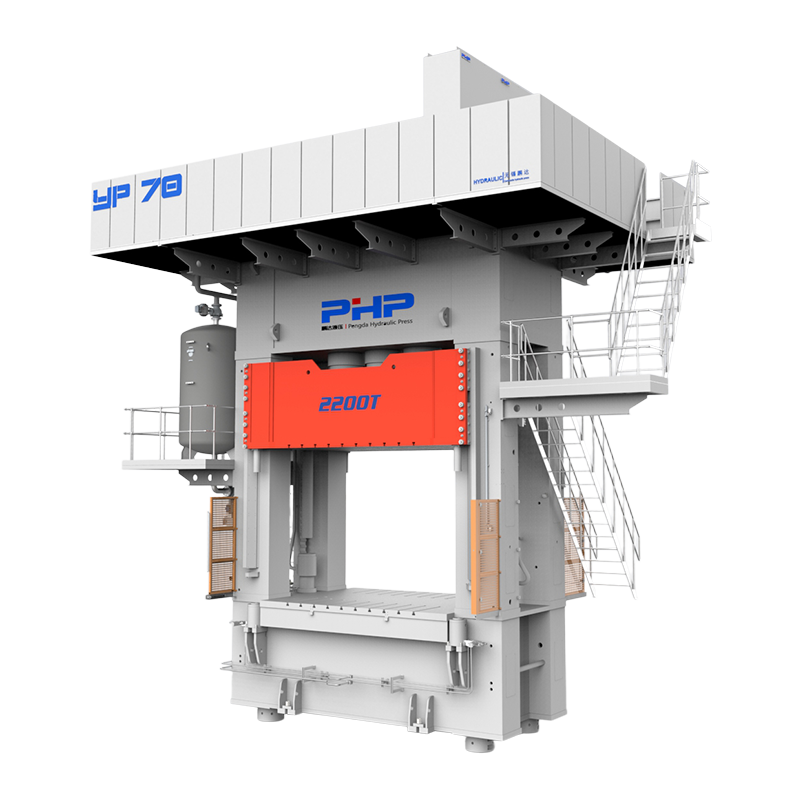


SMC Compression Molding Technology
In SMC compression molding, press tonnage receives a great deal of attention. Buyers commonly compare 500-ton, 1000-ton or 2000-ton presses and calculate whether the available force is sufficient for the projected molding area.
But total press force is only part of the equation.
A hydraulic press can deliver the required total tonnage and still produce uneven molding conditions if the upper and lower platens do not remain sufficiently parallel under load.
For large SMC panels, automotive components, electrical enclosures, battery covers and other precision composite parts, platen parallelism can influence mold gap, local pressure distribution, material flow, part thickness, flash, warpage and long-term tooling wear.
Content
- 1 1. What Is Platen Parallelism in an SMC Press?
- 2 2. How Poor Parallelism Can Create SMC Molding Defects
- 3 3. Why Large SMC Parts Make Parallelism More Important
- 4 4. Static Parallelism vs Parallelism Under Full Load
- 5 5. Press Design Features That Help Maintain Platen Parallelism
- 6 6. How to Diagnose a Platen Parallelism Problem
- 7 7. Parallelism, Mold Wear and Long-Term Production Stability
- 8 8. What Should Buyers Ask When Specifying an SMC Press?
- 9 Platen Parallelism Should Be Evaluated as Part of the Whole SMC Process
- 10 SMC Compression Molding Press Solutions from Wuxi PengdaHZ
- 11 Frequently Asked Questions
- 11.1 What is platen parallelism in a hydraulic press?
- 11.2 Why does platen parallelism matter in SMC compression molding?
- 11.3 Can poor platen parallelism cause flash?
- 11.4 Can platen misalignment cause uneven SMC part thickness?
- 11.5 What is the difference between platen parallelism and platen flatness?
- 11.6 Should platen parallelism be measured under full load?
- 11.7 How does off-center loading affect an SMC press?
- 11.8 What is active parallelism control?
- 11.9 How can I check whether an SMC press has a parallelism problem?
1. What Is Platen Parallelism in an SMC Press?
Platen parallelism describes how closely the working surfaces of the moving and stationary platens remain parallel to each other.
It should not be confused with platen flatness.
Platen Flatness
Flatness describes the geometry of a single platen surface and whether that surface remains within the required plane.
Platen Parallelism
Parallelism describes the relationship between the upper and lower platen working surfaces.
For SMC production, several different operating conditions should be considered:
- unloaded or static parallelism;
- parallelism during mold closing;
- parallelism under partial load;
- parallelism under full molding load;
- parallelism during off-center loading;
- thermal effects when heated molds are installed.
Static parallelism is not the whole story.
A press that measures accurately while unloaded may deform elastically when hundreds or thousands of tons of molding force are applied.
SMC also creates dynamic loading during mold closure. The material flows through the cavity as closing speed, temperature, pressure development and charge distribution interact.
For this reason, loaded parallelism is usually more meaningful to actual production than static alignment alone.
2. How Poor Parallelism Can Create SMC Molding Defects
If the platens tilt or deflect under pressure, the mold may not experience a uniform closing condition.
This can create different cavity gaps and local pressure conditions across the part.
01
Uneven Part Thickness
If one side of the mold closes farther than the other, the local cavity gap can differ across the component.
Platen Tilt → Mold Gap Variation → Uneven Compaction → Thickness Variation
02
One-Sided Flash
Persistent flash at the same edge or corner may indicate more than excessive charge weight or high molding pressure.
Mold alignment, platen deflection and loaded parallelism should also be checked.
03
Incomplete Filling
One area of the part may experience excessive local closure while another receives insufficient compaction or poor material flow.
04
Warpage and Dimensional Variation
Uneven compression can alter material flow, fiber orientation, shrinkage and residual stress across the molded part.
Useful troubleshooting clue:
If one side of an SMC component repeatedly develops flash while the opposite side shows incomplete filling or thickness variation, do not adjust pressure indefinitely. Check mold and platen alignment under load.
3. Why Large SMC Parts Make Parallelism More Important
Parallelism becomes increasingly important as mold dimensions and working areas become larger.
A small mold positioned near the center of a rigid press creates a very different structural condition from a large automotive panel mold occupying most of the platen.
Larger Platen Span
As platen dimensions increase, structural stiffness becomes more important. The press frame, platen, bolster, cylinder arrangement and load path all deform elastically to some degree under force.
The engineering goal is therefore not zero deformation, but deformation controlled within the requirements of the molding process.
Off-Center Loading
Not every SMC mold creates a perfectly centered load. A cavity may be positioned toward one side of the platen, multiple cavities may be asymmetrical, or the charge may create uneven resistance during initial material flow.
This creates an eccentric load that can generate a turning moment on the moving platen.
Rated Tonnage ≠ Uniform Force Distribution Total force capacity may be sufficient while local mold pressure is still uneven.
Mold Weight and Geometry
Large SMC molds may be heavy, heated, multi-cavity and structurally asymmetrical. These characteristics should be considered together with press tonnage when selecting the press architecture.
4. Static Parallelism vs Parallelism Under Full Load
A specification such as “platen parallelism: 0.05 mm” is incomplete unless the measurement conditions are also defined.
Press buyers should ask:
- Was parallelism measured unloaded or under pressure?
- At what press force?
- Over what platen area?
- Was the load centered?
- Was eccentric loading evaluated?
- Was the machine cold or thermally stabilized?
- How many measurement points were used?
| Specification | Why It Matters |
| Unloaded Parallelism | Shows basic machine geometry and initial alignment |
| Parallelism at Partial Load | Shows how the frame begins to deform under force |
| Parallelism at Production Load | More representative of real SMC molding conditions |
| Off-Center Load Parallelism | Important for asymmetric molds and cavity layouts |
| Hot-Condition Parallelism | Can matter where large heated molds affect thermal expansion |
| Measurement Area | Prevents misleading comparison between different platen sizes |
There is no useful universal parallelism value for every SMC press.
The required accuracy depends on machine size, platen dimensions, mold layout, part tolerances, load distribution and the measurement method.
5. Press Design Features That Help Maintain Platen Parallelism
Good platen parallelism does not come from one component. It is the result of the complete structural, hydraulic and control design.
Rigid Frame Structure
Frame stiffness, crosshead rigidity, platen thickness and the overall load path influence how the press deforms under molding force.
- frame stiffness;
- crosshead design;
- platen thickness;
- cylinder arrangement;
- allowable deflection.
Guided Moving Platen
A stable guidance system helps control lateral movement and platen rotation during approach, molding and return.
- guide columns;
- guide bushings;
- guide rails;
- precision sliding structures.
Multi-Cylinder Synchronization
On large presses, unequal cylinder movement can create platen tilt. Position feedback and hydraulic synchronization help maintain consistent motion.
Active Parallelism Control
Multiple position sensors can monitor platen displacement and allow the hydraulic system to compensate for tilt during loading.
Example Active Leveling Logic
Corner 1
0.00 mm
0.00 mm
Corner 2
+0.03 mm
+0.03 mm
Corner 3
-0.02 mm
-0.02 mm
Corner 4
+0.01 mm
+0.01 mm
Position feedback can be used to detect deviation between different areas of the moving platen. The control system can then adjust individual hydraulic actuators or leveling circuits to reduce tilt.
Not every SMC press requires active leveling. Its value becomes greater when large platens, asymmetric molds, high precision or substantial eccentric loading are involved.
6. How to Diagnose a Platen Parallelism Problem
When dimensional problems or persistent flash appear, increasing or reducing molding pressure should not automatically be the first corrective action.
1
Look for Repeating Defect Patterns
Check whether flash, thickness variation, incomplete filling or dimensional problems repeatedly occur in the same physical area of the mold.
2
Inspect the Mold First
Verify mold flatness, mounting, parting surfaces, guide pins, bushings, inserts, contamination and local damage before attributing the problem to the press.
3
Measure Static Press Geometry
Depending on the required accuracy, inspection may use dial indicators, precision levels, straightedges, laser systems or electronic displacement sensors.
4
Measure Under Load
If static geometry is acceptable but production problems remain, compare platen displacement as molding force increases.
0% Load→25%→50%→75%→Production Load
Measuring only an unloaded press can miss structural deformation that appears only after substantial molding force is applied.
7. Parallelism, Mold Wear and Long-Term Production Stability
Poor load distribution does not affect only one molded component. Repeated uneven loading can create localized mechanical stress over thousands of production cycles.
Possible long-term effects include:
- uneven mold parting-line wear;
- guide pin and bushing wear;
- localized tooling damage;
- increased flash-trimming requirements;
- more frequent mold adjustment;
- greater scrap and rework;
- unstable dimensional capability.
Good platen parallelism should not be promoted as guaranteeing a specific increase in mold life. Tool life also depends on mold steel, molding pressure, lubrication, temperature, alignment and maintenance.
However, maintaining more uniform loading can help reduce unnecessary localized stress and uneven tooling wear.
8. What Should Buyers Ask When Specifying an SMC Press?
Tonnage and platen dimensions alone are not enough when comparing SMC press quotations.
| Question | Why Ask It? |
| What is the unloaded platen parallelism? | Establishes basic machine geometry |
| What is parallelism under rated or production load? | More relevant to actual molding conditions |
| What measurement area is used? | Allows meaningful comparison between machines |
| How much platen deflection occurs under full load? | Indicates structural stiffness |
| Is off-center loading permitted? | Important for asymmetric molds |
| How is the moving platen guided? | Influences motion and alignment stability |
| How are multiple cylinders synchronized? | Important for large multi-cylinder presses |
| Is active leveling available? | Useful for large or precision SMC parts |
| How is parallelism verified? | Helps judge whether specifications are comparable |
| Can platen position data be recorded? | Useful for production troubleshooting |
Platen Parallelism Should Be Evaluated as Part of the Whole SMC Process
SMC molding quality depends on several interacting variables rather than one machine specification.
Material+Charge Pattern+Mold+Temperature+Press Motion+Pressure+Platen Alignment
Platen parallelism influences how the mold closes, how pressure is distributed and how consistently the SMC charge flows and compacts.
Key Engineering Principle
The correct total force is not enough. For demanding SMC applications, that force also needs to be delivered through a sufficiently stiff, stable and well-aligned press structure.
SMC Compression Molding Press Solutions from Wuxi PengdaHZ
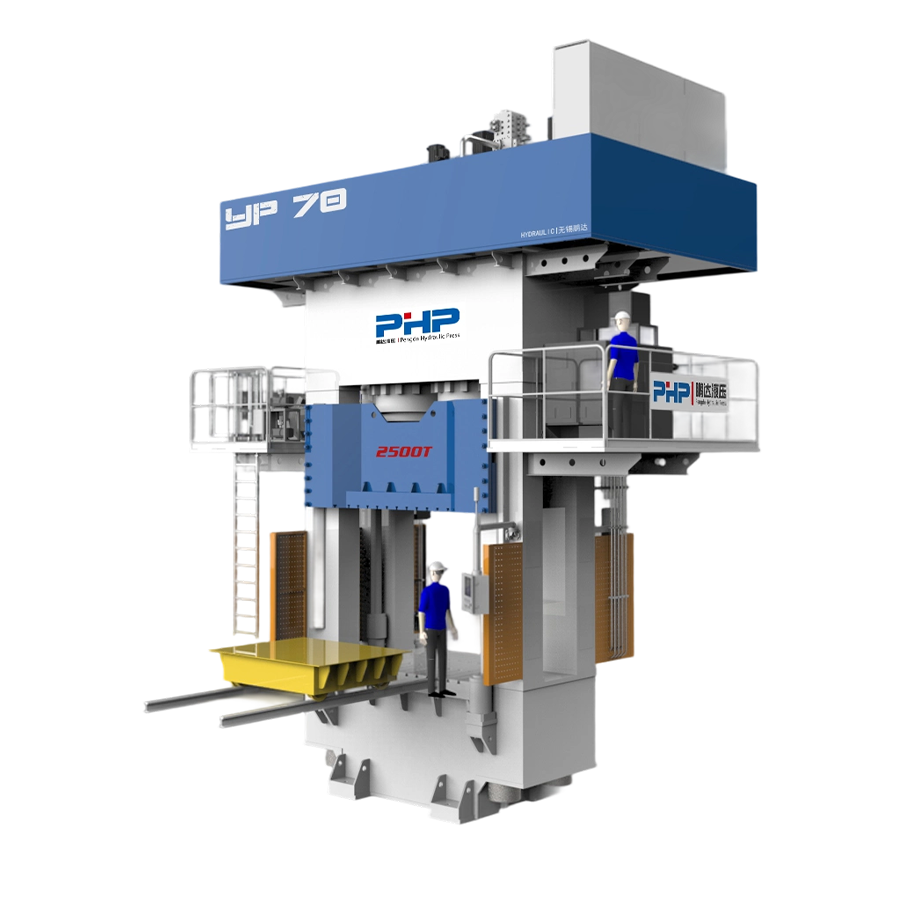
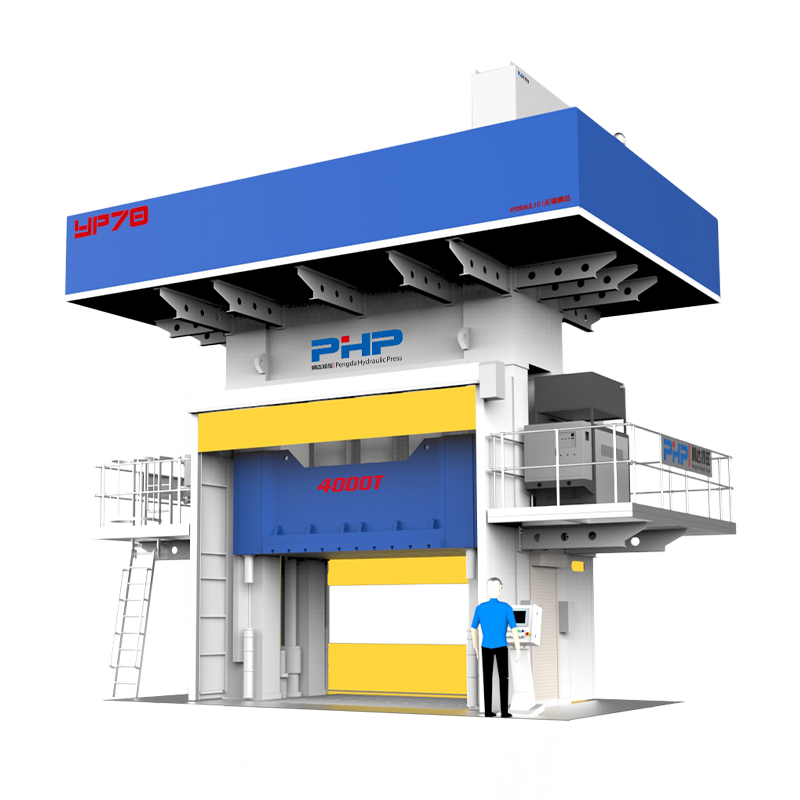
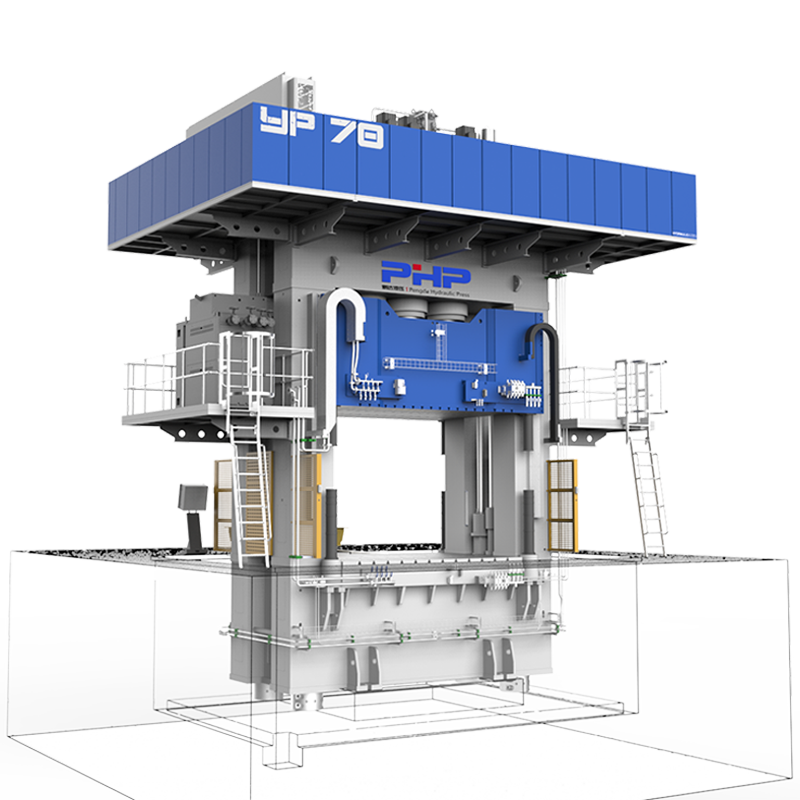
Wuxi PengdaHZ Intelligent Equipment Co., Ltd. develops hydraulic press solutions for SMC, BMC and composite compression molding applications.
When evaluating an SMC press, tonnage alone is not sufficient. Platen size, structural stiffness, guide accuracy, mold dimensions, off-center loading, pressure control and required part tolerances should also be considered.
For initial equipment evaluation, useful information includes part dimensions, projected molding area, mold dimensions and weight, required pressure, part thickness tolerance, cavity layout, stroke, daylight and target cycle time.
Visit wuxipd.com for more information about customized SMC compression molding presses and hydraulic press systems.
Frequently Asked Questions
What is platen parallelism in a hydraulic press?
Platen parallelism describes how closely the upper and lower working surfaces remain parallel to each other. For compression molding, the condition under load is often more important than the unloaded measurement alone.
Why does platen parallelism matter in SMC compression molding?
Poor parallelism can change the local mold gap and pressure distribution, potentially contributing to thickness variation, flash, incomplete filling, dimensional instability and uneven tooling wear.
Can poor platen parallelism cause flash?
It can contribute to localized flash if the mold closes unevenly. Charge weight, molding pressure, mold condition and parting-line wear should also be checked.
Can platen misalignment cause uneven SMC part thickness?
Yes. Uneven mold closure can create different cavity gaps and compaction conditions across the molded part.
What is the difference between platen parallelism and platen flatness?
Flatness describes a single platen surface, while parallelism describes the relationship between the upper and lower platen surfaces.
Should platen parallelism be measured under full load?
For demanding SMC applications, loaded measurements can reveal structural deformation that may not be visible during an unloaded inspection.
How does off-center loading affect an SMC press?
An eccentric load creates a turning moment on the moving platen and can increase the tendency for platen tilt, unequal cylinder loading and uneven structural deflection.
What is active parallelism control?
Active parallelism control uses position feedback at multiple points and adjusts hydraulic actuators or leveling circuits to reduce platen tilt during movement and loading.
How can I check whether an SMC press has a parallelism problem?
Persistent one-sided flash, repeating thickness differences, asymmetric filling problems or uneven mold wear can justify checking static and loaded platen parallelism together with mold alignment.