English
 中文简体
中文简体 Español
 Português
 Deutsch
 русский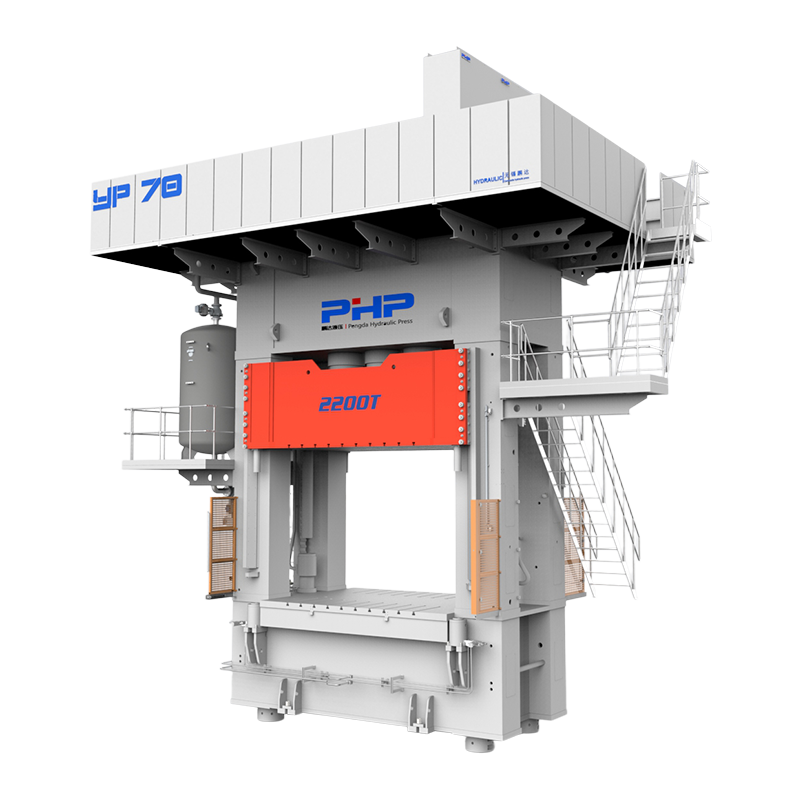
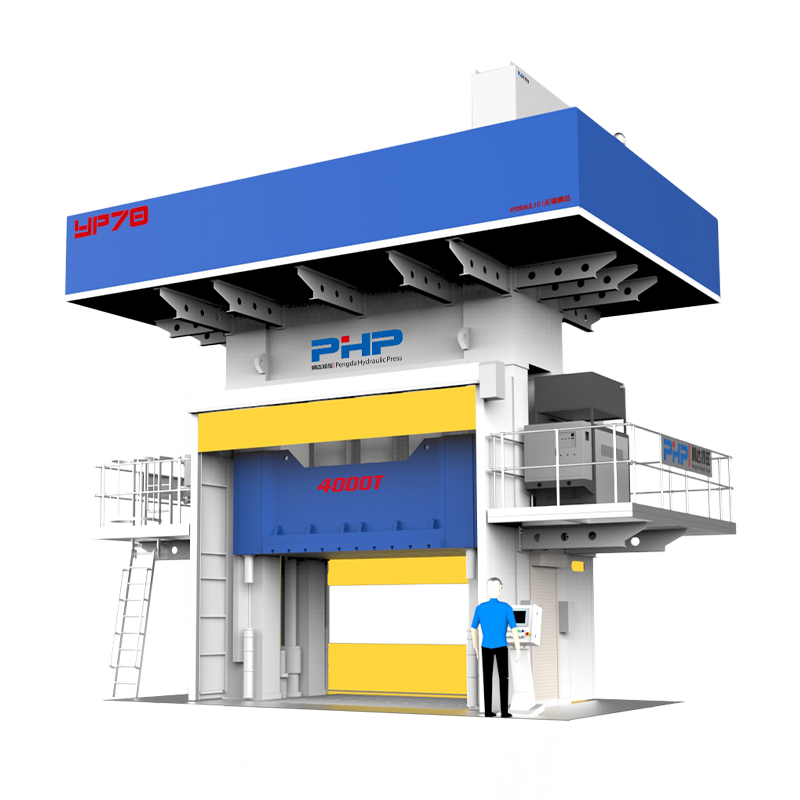
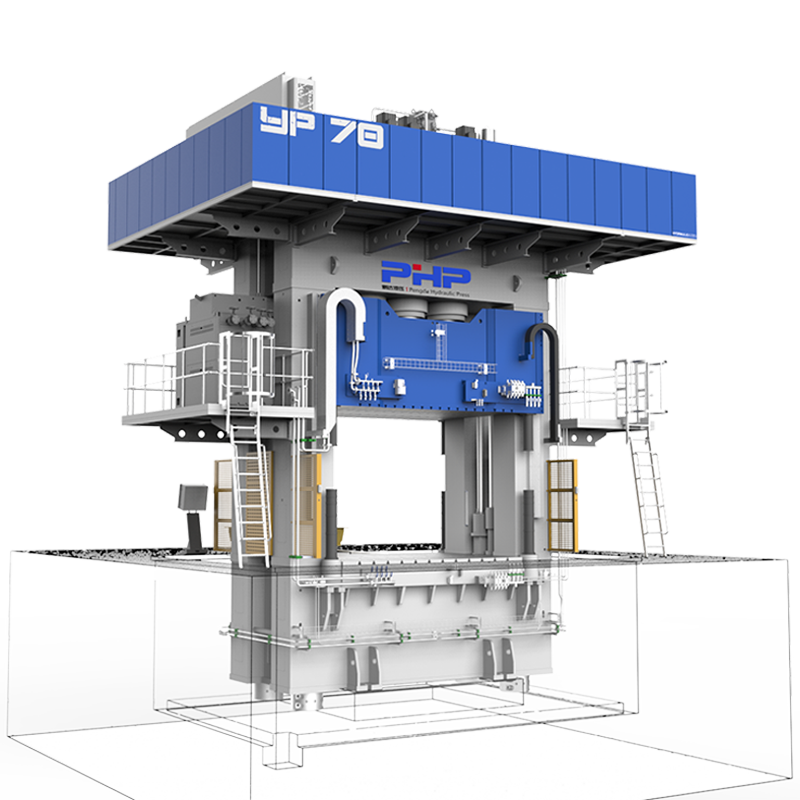
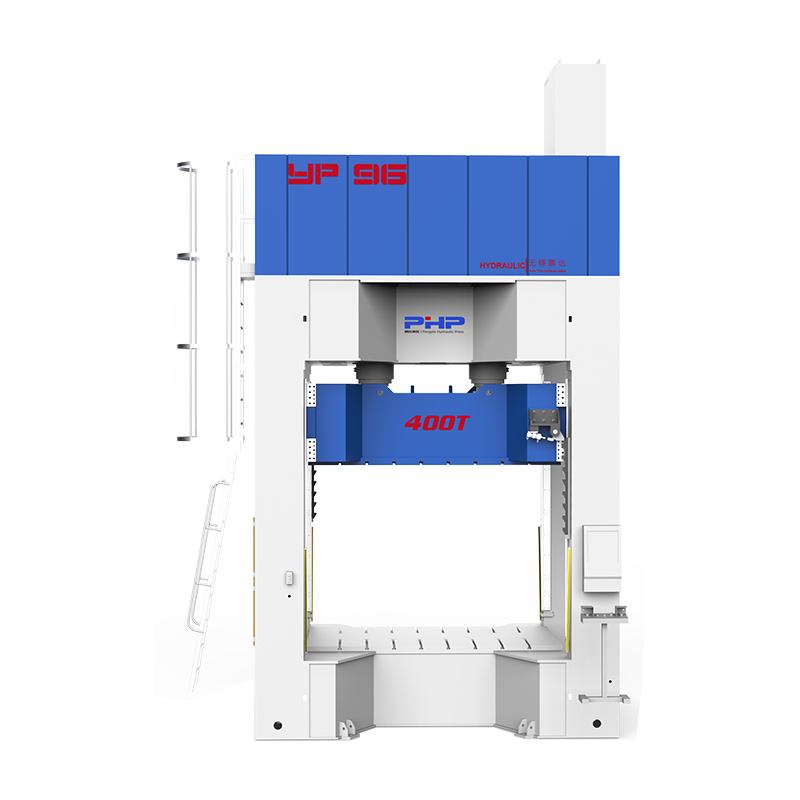
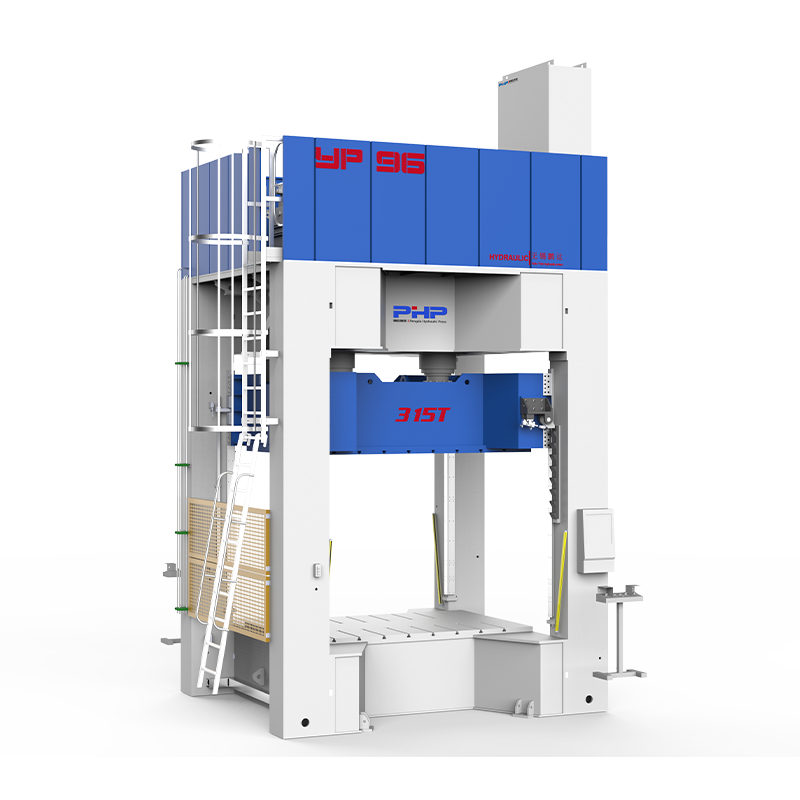
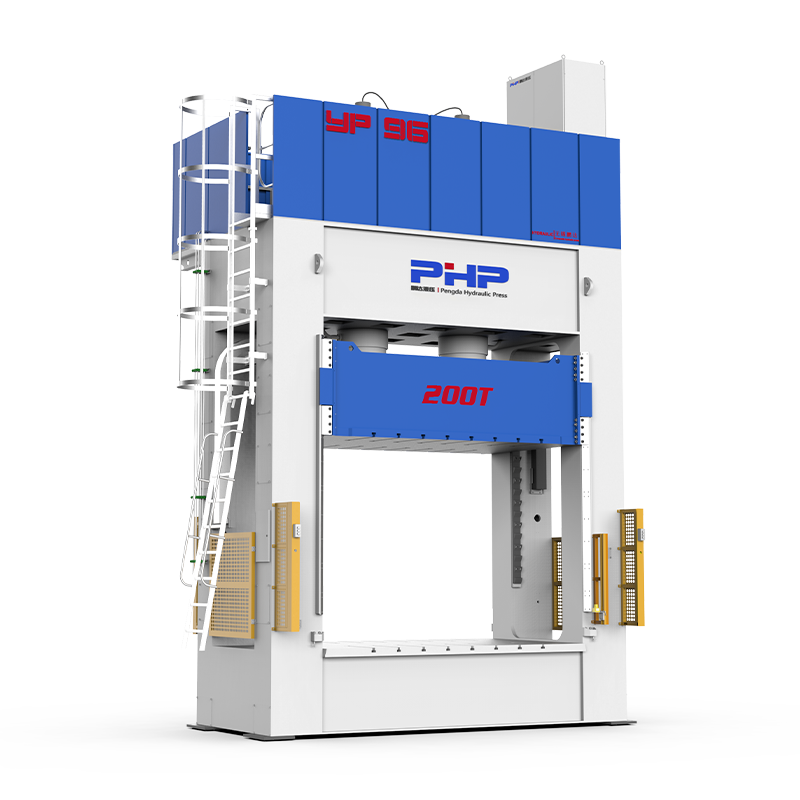


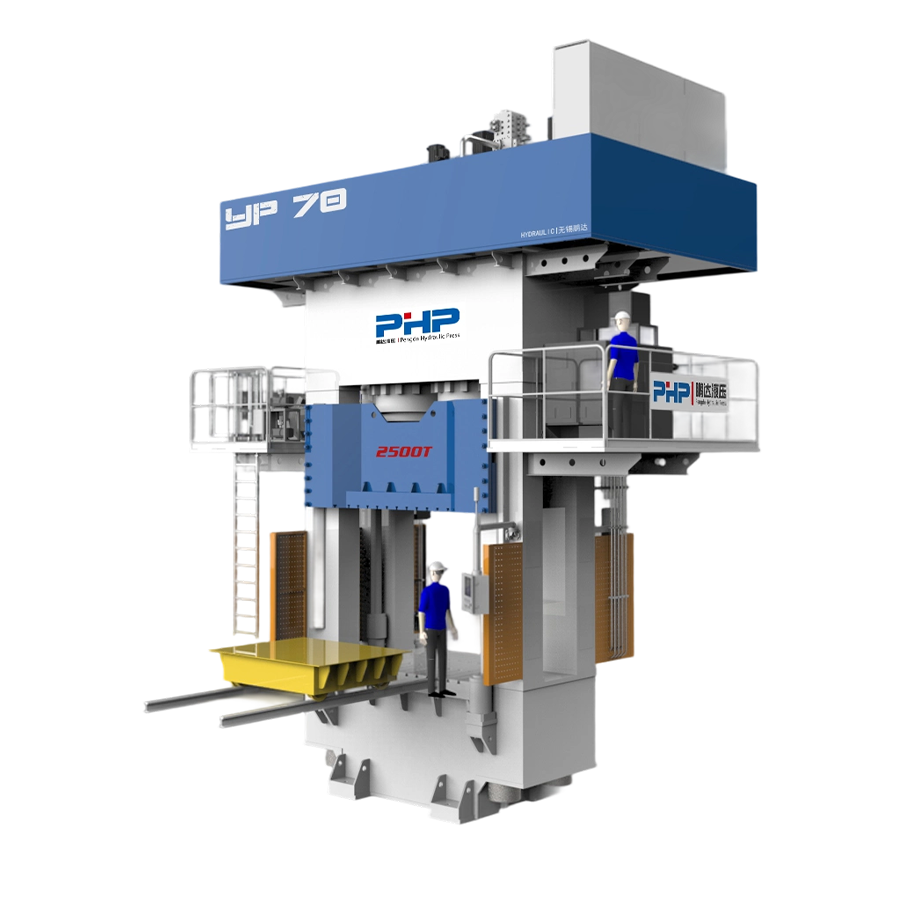
Sheet Molding Compound, commonly known as SMC, is widely used in automotive, electrical, transportation, infrastructure and industrial manufacturing. Its value comes not only from the properties of the composite itself, but also from the ability to compression mold large, complex and highly integrated parts in repeatable production cycles.
For manufacturers, SMC should be viewed as a complete production system rather than simply a composite sheet. Material formulation, charge preparation, mold design, temperature, molding pressure, press closing profile and cure time all affect the final part.
This guide explains the material properties, compression molding process, hydraulic press requirements, quality control, design rules, cost factors and industrial applications that engineers should consider when planning SMC production.
Content
- 1 What Is SMC and What Is It Made Of?
- 2 How SMC Compression Molding Works
- 3 SMC Mold Design and Hydraulic Press Requirements
- 4 Mechanical, Thermal and Electrical Testing
- 5 Common SMC Defects and How to Troubleshoot Them
- 6 Design Guidelines for Manufacturing SMC Parts
- 7 Surface Quality and Class A Finishing
- 8 Where Is SMC Used in Manufacturing?
- 9 SMC Cost and Production Scalability
- 10 How to Select an SMC Manufacturing Supplier
- 11 SMC Sustainability and End-of-Life Considerations
- 12 Planning an SMC Molding Project?
- 13 Frequently Asked Questions
- 13.1 What are typical tensile and flexural properties of SMC?
- 13.2 What mold temperature should be used for standard polyester SMC?
- 13.3 What molding pressure should be used for SMC?
- 13.4 How do I calculate the required SMC press tonnage?
- 13.5 How can SMC porosity be reduced?
- 13.6 Can SMC achieve a Class A painted surface?
- 13.7 Which ASTM or ISO standards are commonly used for SMC?
- 13.8 Can SMC be recycled?
What Is SMC and What Is It Made Of?
SMC is a pre-impregnated, fiber-reinforced thermoset molding compound supplied in sheet form. The material is normally produced by combining liquid resin, chopped reinforcement, mineral fillers and processing additives between carrier films. After a controlled maturation period, the material develops the viscosity needed for handling and compression molding.
The most common matrix is unsaturated polyester resin, especially for general industrial and automotive applications. Vinyl ester systems may be used where higher chemical resistance or improved toughness is required, while phenolic and other specialty thermoset systems are selected for applications requiring specific heat, smoke or flame characteristics.
Reinforcement is usually chopped E-glass fiber. Standard commercial SMC frequently contains approximately 20–35% glass fiber by weight, while structural grades may use substantially higher reinforcement levels. Carbon-fiber SMC is also available for high-performance lightweight structures, although its material cost is significantly higher.
Fillers and additives are equally important. Calcium carbonate may be used to control cost and rheology, aluminum trihydrate may contribute to flame-retardant formulations, and low-profile additives help reduce molding shrinkage and improve painted surface quality. Pigments, catalysts, mold-release agents and thickeners also influence the way the compound flows and cures.
Typical SMC Material Properties
SMC properties vary widely according to resin chemistry, fiber content, fiber orientation, filler loading and molding conditions. The following values are therefore best treated as typical engineering ranges rather than universal specifications.
| Property | Typical Range | Common Test Method | Engineering Significance |
|---|---|---|---|
| Density | Approx. 1.7–2.0 g/cm³ | ASTM D792 / ISO 1183 | Determines part weight and charge requirement |
| Glass fiber content | Approx. 20–35 wt.% for many standard grades | ISO 1172 or supplier-specific method | Affects strength, stiffness and flowability |
| Tensile strength | Approx. 55–170 MPa | ASTM D638 / ISO 527 | Basic structural load capacity |
| Flexural strength | Approx. 140–250 MPa | ASTM D790 / ISO 178 | Important for panels, covers and housings |
| Flexural modulus | Approx. 8–15 GPa | ASTM D790 / ISO 178 | Indicates bending stiffness |
| Heat deflection temperature | Often around 180–210°C for suitable structural grades | ASTM D648 / ISO 75 | Evaluates dimensional performance under heat and load |
| Glass-transition temperature | Often around 100–160°C depending on resin formulation | DMA / DSC | Indicates temperature-dependent matrix behavior |
Engineering note: Data-sheet properties and finished-part properties are not always identical. During compression molding, the material flows through the cavity and chopped fibers may align with the direction of flow. As a result, tensile or flexural performance can differ depending on where a specimen is taken from the molded component.
Higher fiber content generally improves stiffness and strength, but it can also make the compound more difficult to flow into thin walls, deep ribs or long cavity regions. Material selection must therefore balance mechanical performance, moldability, surface finish, processing pressure and material cost.
How SMC Compression Molding Works
SMC is most commonly processed using heated matched-metal compression molds installed in a hydraulic molding press. Unlike conventional injection molding, the material does not normally enter through a runner and gate system. Instead, weighed pieces of SMC are placed directly in the open mold as a carefully designed charge.
Charge preparation. SMC sheets are cut and weighed according to the required part mass and charge pattern.
Mold loading. Carrier film is removed and the SMC charge is positioned in the heated lower cavity.
Fast approach. The press closes rapidly through the non-contact portion of the stroke to reduce unnecessary cycle time.
Controlled molding closure. As the mold contacts the SMC, closing speed is reduced so that the compound can flow gradually through the cavity.
Pressure build-up. The press applies the required molding pressure while excess air escapes through the mold venting system.
Cure and pressure hold. Heat from the mold activates the thermoset cure reaction while the press maintains pressure.
Opening and ejection. Once the required cure level is reached, pressure is released, the mold opens and the part is removed.
Trimming and inspection. Flash is removed and critical dimensions, surface condition and part performance are checked.
Typical SMC Molding Parameters
| Process Parameter | Typical Starting Range | What Controls It |
|---|---|---|
| Mold temperature | Approx. 140–160°C | Resin chemistry, part thickness and required flow time |
| Molding pressure | Approx. 3.5–10 MPa for many conventional grades | Fiber content, geometry, flow length and surface requirement |
| Higher-pressure structural molding | Can approach 10–15 MPa | Highly reinforced or difficult-to-fill structures |
| Initial charge coverage | Often around 50–90% of projected cavity area | Required material flow and fiber orientation |
| Cure / pressure-hold time | Often around 60–180 seconds | Resin system, thickness and mold temperature |
These values provide a useful starting window, but the final production recipe should be developed using the selected SMC supplier's processing recommendations and validated by molding trials.
Why press motion matters: SMC molding normally works best with a staged press profile rather than a single closing speed. A typical sequence is fast approach → controlled contact → slow flow closure → pressure build-up → pressure hold → controlled release. This allows manufacturers to minimize idle time while still controlling material flow and air evacuation.
Closing too quickly after contact can move fibers aggressively, trap air and generate excessive flash. Closing too slowly may allow the resin to begin curing before distant ribs or corners have been completely filled. Modern SMC presses therefore need accurate control of both position and pressure throughout the closing cycle.
SMC Mold Design and Hydraulic Press Requirements
The press and mold must be considered as one system. Selecting an SMC press only by nominal tonnage is not enough because platen dimensions, daylight, stroke, structural rigidity, parallelism, closing speed and heating arrangement can be equally important.
Calculating Required Press Tonnage
A basic press-force calculation starts with projected molding area and required molding pressure.
Required Press Force = Projected Molding Area × Molding Pressure
For example, if the projected part area is 2,000 cm² and the process requires 10 MPa of molding pressure, the theoretical force is approximately 2,000 kN, which is roughly 204 metric tons-force.
The production press should normally include an appropriate engineering margin to account for process variation, mold loading, flash containment, load distribution and future optimization.
Press tonnage and molding pressure are not the same thing. A 1,000-ton hydraulic press does not automatically apply the same molding pressure to every mold. Molding pressure depends on how the available force is distributed over the projected area of the component.
Press Specifications That Should Be Checked
- Platen dimensions: the mold footprint should be adequately supported.
- Daylight: sufficient opening is needed for the mold, ejector system and part-handling equipment.
- Stroke: the press must achieve the required loading, closing and ejection positions.
- Platen parallelism: important for large molds and components with strict thickness control.
- Low-speed closing control: necessary for controlled SMC flow.
- Pressure accuracy: improves repeatability during the curing stage.
- Heating control: stable mold temperature reduces uneven flow and cure.
- Recipe storage: useful when one press produces multiple SMC components.
- Automation interface: important for robotic loading, unloading and high-volume production.
Mold Design Priorities
SMC mold design should begin with the expected charge pattern and flow path. The objective is to fill the entire cavity before excessive cure occurs while avoiding unnecessary fiber movement.
Venting should be located near expected final-fill regions so that trapped air can escape without excessive resin or fiber loss. Flash lands and shear edges must control material at the parting line, while heating circuits should maintain a reasonably uniform surface temperature across the mold.
Deep ribs, bosses and narrow cavities deserve particular attention. If these features sit at the end of a long flow path, the material may gel before they fill completely. Inserts must also be located securely enough to resist movement as press pressure increases and the SMC flows around them.
SMC Tooling Review Checklist
- Charge weight and initial charge position
- Maximum material flow distance
- Vent locations and vent depth
- Flash land condition
- Mold-temperature distribution
- Rib and boss filling
- Insert location and retention
- Ejection layout
- Parting-line accessibility for maintenance
- Expected trimming requirement
Mechanical, Thermal and Electrical Testing
The purpose of SMC quality testing is not simply to confirm that the compound meets a supplier data sheet. Production teams must verify that the actual molded part satisfies the customer's engineering specification.
Common qualification tests include tensile testing according to ASTM D638 or ISO 527, flexural testing according to ASTM D790 or ISO 178, impact testing using methods such as ASTM D256 or ISO 179, and heat-deflection testing according to ASTM D648 or ISO 75.
Electrical-grade SMC may additionally require dielectric strength, insulation resistance, arc resistance or other electrical tests. ASTM D149 is commonly referenced for dielectric strength, while ASTM D257 may be used for volume and surface resistivity.
Thermal analysis such as DSC and DMA can help verify cure behavior and temperature-dependent material properties. Outdoor parts may also require UV exposure, accelerated weathering, humidity conditioning or thermal cycling.
Test method and acceptance limit are two different things. ASTM and ISO standards define how a property is measured. The actual pass/fail value should normally come from the part drawing, material specification, OEM requirement, PPAP documentation or customer control plan.
Common SMC Defects and How to Troubleshoot Them
SMC defects usually have more than one possible cause. Effective troubleshooting therefore requires manufacturers to review the material, mold, temperature and press profile together.
| Defect | Common Causes | Typical Corrective Actions |
|---|---|---|
| Porosity / internal voids | Trapped air, insufficient venting, unsuitable charge placement, inadequate consolidation | Review venting, charge pattern, closing profile and pressure build-up |
| Short fill | Insufficient charge, excessive flow length, premature cure, low mold temperature in some regions | Confirm charge weight, reposition charge and review temperature and flow-stage pressure |
| Excessive flash | Too much material, excessive molding pressure, insufficient clamping force, mold wear | Check charge weight, required force, parting surfaces and platen parallelism |
| Fiber separation | Excessive flow or overly aggressive closing speed | Reduce flow distance and optimize the slow-closing stage |
| Blisters | Trapped gas, incomplete cure or poor temperature control | Review cure time, venting and mold-temperature uniformity |
| Warpage | Uneven cure, temperature gradient, uneven thickness or fiber orientation | Map mold temperature and review geometry, cooling and charge flow |
| Surface waviness | Shrinkage, fiber read-through, unstable temperature or unsuitable material grade | Review SMC formulation, mold surface, pressure and cure cycle |
For critical structural parts, manufacturers may also use ultrasonic inspection, phased-array systems, sectioning or other non-destructive and destructive inspection methods to look for internal voids or delamination. Optical inspection systems are increasingly useful for repetitive surface defects and flash control.
Design Guidelines for Manufacturing SMC Parts
A good SMC design should support both structural performance and predictable compression flow. Wherever possible, engineers should avoid abrupt thickness changes, extremely thin sections immediately followed by deep ribs, and isolated heavy masses of material.
Nominal wall thicknesses around 2.5–5 mm are common in many industrial SMC components, although both thinner and thicker designs are possible with suitable materials and tooling. Gradual transitions are preferred where thickness changes are necessary.
Draft is required for reliable release. Approximately 1° may be sufficient for some smooth surfaces, while deeper or textured geometries normally require more. Sharp internal corners should be replaced by radii to improve both material flow and structural durability.
Ribs should provide stiffness without creating unnecessary material accumulation. For cosmetic surfaces, a rib base around 50–75% of the adjacent wall thickness may serve as a useful starting point, but final geometry should be validated against the selected SMC system.
Inserts and Fasteners
SMC can incorporate molded-in metal inserts, threaded features and local reinforcement. Inserts should include features that resist both rotation and pull-out while avoiding sharp stress concentrations around the composite.
Mechanical fasteners should distribute clamping force across a sufficient area. Washers, local reinforcement or molded load-spreading features may be required around highly loaded bolts.
Structural adhesives are another widely used option for joining SMC to SMC, aluminum, steel or selected thermoplastics. Epoxy, polyurethane and acrylic systems may all be suitable depending on production speed, service temperature and joint design.
Because cured SMC is a thermoset, it cannot simply be melted and welded in the same manner as a conventional thermoplastic. Ultrasonic or thermal joining is therefore generally limited to specially designed hybrid assemblies or thermoplastic inserts.
Surface Quality and Class A Finishing
One reason SMC has remained important in the automotive industry is its ability to produce large exterior panels with high-quality painted surfaces. Achieving a Class A result, however, depends on the entire manufacturing system.
Low-profile resin formulations help control shrinkage, but mold polish, temperature uniformity, charge flow and molding pressure also influence fiber read-through and surface waviness.
A typical finishing process includes:
- visual inspection for porosity, exposed fiber and surface defects;
- removal of flash and edge imperfections;
- cleaning to remove dust, oil and mold-release residue;
- localized sanding or surface activation if required;
- application of an SMC-compatible primer;
- basecoat and topcoat application;
- final adhesion and appearance inspection.
For painted automotive panels, the coating process should be validated together with the SMC grade because surface contamination, porosity and thermal expansion can all affect final appearance.
Where Is SMC Used in Manufacturing?
SMC is most attractive when manufacturers need complex molded geometry together with corrosion resistance, electrical insulation, reduced weight or high component integration.
Automotive and New Energy Vehicles
Applications include exterior panels, hoods, structural covers, underbody shields, battery covers and electrical protection components. Compared with steel, properly redesigned SMC parts can reduce weight while eliminating corrosion protection and combining several stamped or welded components into one molding.
Electrical and Power Equipment
Electrical enclosures, distribution boxes, meter housings, switchgear parts and insulating structures benefit from the material's electrical resistance and corrosion performance.
Rail, Marine and Infrastructure
SMC can be used for transportation panels, equipment housings, utility structures, access covers, cable-system components and other parts exposed to moisture or corrosive conditions.
HVAC and Industrial Equipment
Large equipment covers, fan housings and machine enclosures can take advantage of SMC's ability to integrate ribs, mounting features, bosses and complex three-dimensional surfaces into one molded component.
SMC Cost and Production Scalability
Raw material price alone is not a useful way to compare SMC with steel, aluminum or thermoplastics. Engineers should calculate the total manufactured cost of an acceptable part.
Part Cost = Material + Scrap + Press Time + Labor + Energy + Trimming + Finishing + QC + Tooling Amortization
Material cost depends on net part weight, charge weight, trim loss and SMC grade. High-glass structural SMC, flame-retardant formulations, low-density grades and carbon-fiber systems can have very different economics.
Press time is another major factor. A 90-second cycle and a 180-second cycle generate very different annual output from the same molding machine. When production volume increases, automation for material handling, loading, unloading and trimming can improve utilization and reduce operator-related variation.
Tooling should be amortized across realistic lifetime production. If a mold and associated tooling investment costs $200,000 and is used to produce 200,000 acceptable parts, the basic tooling contribution is approximately $1.00 per part before maintenance and repair are considered.
Secondary operations such as trimming, drilling, painting, bonding and assembly also need to be included. In many industrial applications, one of the main advantages of SMC is the ability to eliminate some of these downstream processes by integrating functions directly into the molded component.
How to Select an SMC Manufacturing Supplier
A supplier audit should cover more than press tonnage and quoted unit price. Manufacturers should examine the supplier's ability to control material, tooling, molding parameters and final-part validation.
Recommended Supplier Review Points
- ISO 9001, IATF 16949 or customer-required quality certification
- SMC material batch and shelf-life control
- Storage and maturation management
- Press pressure, position, time and temperature traceability
- Mold maintenance and heating-system capability
- Prototype and pilot-production support
- PPAP or customer-specific qualification capability
- Dimensional and mechanical testing resources
- Production-capacity calculation
- Contingency plans for press or tooling downtime
SMC Sustainability and End-of-Life Considerations
Conventional SMC uses a crosslinked thermoset matrix. Once cured, the resin cannot simply be reheated and remelted in the same way as polypropylene, nylon or another thermoplastic.
Mechanical recycling is one practical route for some clean SMC waste streams. Scrap may be ground and reused as filler or reinforcement in selected composite applications. Thermal treatment and pyrolysis may also be technically possible, particularly where valuable reinforcement can be recovered, although economics and local infrastructure remain important limitations.
Some composite waste can also be evaluated for industrial co-processing where both the organic and mineral fractions may have value.
For U.S. production facilities, environmental requirements depend on the actual resin system and manufacturing process. Reinforced plastic composite production may fall under applicable federal, state and local rules governing hazardous air pollutants, volatile constituents, coatings and industrial waste. Facilities should therefore evaluate compliance based on their specific SMC formulation and process rather than assume that one rule applies identically to every operation.
Planning an SMC Molding Project?
Selecting an SMC hydraulic press should begin with the component and mold—not simply with a tonnage number.
Wuxi PengdaHZ Intelligent Equipment Co., Ltd. provides hydraulic and servo-controlled molding press solutions for SMC and other composite manufacturing processes.
For an initial press evaluation, manufacturers can provide:
- part drawing or 3D model;
- projected molding area;
- SMC grade and required molding pressure;
- part weight and nominal thickness;
- mold dimensions and mold weight;
- required press stroke and daylight;
- target cycle time;
- annual production volume;
- automation requirements.
These inputs make it possible to evaluate the required press tonnage, platen size, stroke, daylight, closing-speed profile, pressure control and automation configuration for the production program.
Request an SMC Press EvaluationFrequently Asked Questions
What are typical tensile and flexural properties of SMC?
Common glass-fiber polyester SMC grades may provide tensile strength in roughly the 55–170 MPa range and flexural strength around 140–250 MPa. Structural formulations can exceed these figures. Actual design values should always be taken from the selected material grade and validated using representative molded parts.
What mold temperature should be used for standard polyester SMC?
Approximately 140–160°C is a common starting range for many polyester-based SMC systems. The correct value depends on formulation, part thickness, flow length and cure-time target.
What molding pressure should be used for SMC?
Many conventional SMC formulations operate within approximately 3.5–10 MPa, while highly reinforced or more difficult structural parts may require higher pressure. The correct value should be based on the material supplier's processing guidance and validated during trials.
How do I calculate the required SMC press tonnage?
Multiply the projected molding area by the required molding pressure, then add an appropriate engineering margin. The press must also be checked for platen dimensions, stroke, daylight, parallelism and low-speed control.
How can SMC porosity be reduced?
Check charge placement, final-fill vent locations, press closing profile, pressure build-up and mold temperature. Porosity is often caused by a combination of trapped air and unsuitable flow behavior rather than one isolated parameter.
Can SMC achieve a Class A painted surface?
Yes. Suitable low-profile SMC grades can achieve high-quality painted surfaces when material formulation, mold polish, temperature control, flow, pressure and coating preparation are all properly controlled.
Which ASTM or ISO standards are commonly used for SMC?
Typical references include ASTM D638 or ISO 527 for tensile properties, ASTM D790 or ISO 178 for flexural properties, ASTM D256 or ISO 179 for impact behavior, ASTM D648 or ISO 75 for heat-deflection performance and ASTM D149 for dielectric strength.
Can SMC be recycled?
Cured SMC cannot be remelted like a thermoplastic, but mechanical grinding, use as composite filler, selected thermal recovery processes and industrial co-processing may provide end-of-life options depending on material type and local recycling infrastructure.
Engineering Disclaimer: Numerical values in this article are intended as typical engineering reference ranges. Actual SMC properties, molding temperatures, pressures and cycle parameters vary according to material formulation, fiber content, part geometry and tooling. Production settings should be confirmed with the selected material supplier and validated through molding trials.