
 English
 中文简体
中文简体 Español
 Português
 Deutsch
 русский
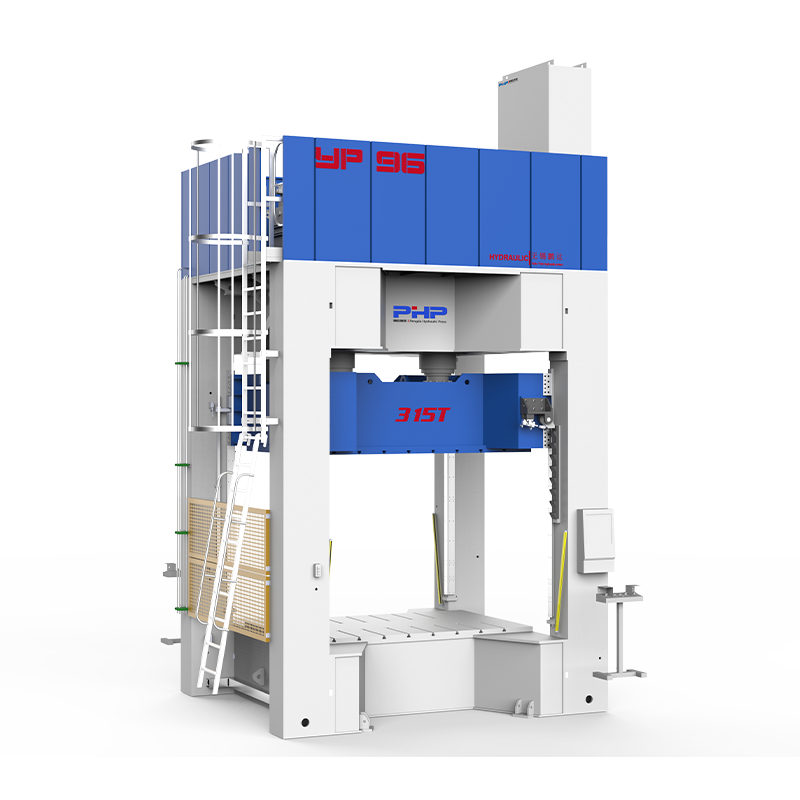
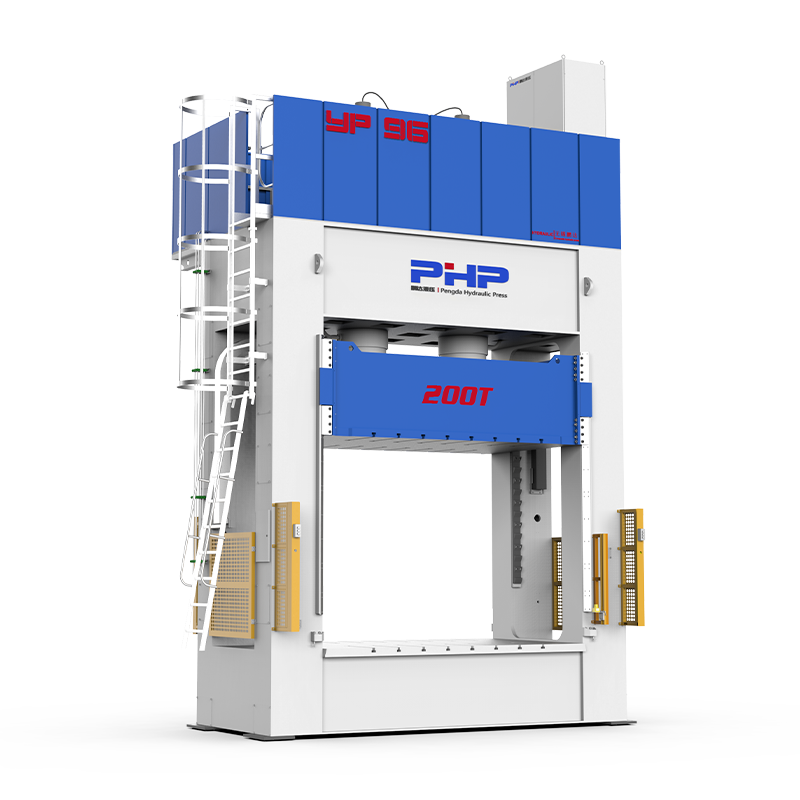


Selecting an SMC compression molding press is not simply a matter of choosing the largest machine within the available budget.
A 500-ton, 1000-ton and 2000-ton SMC press can all use similar compression molding principles, but they support very different mold sizes, projected molding areas, production requirements and part geometries.
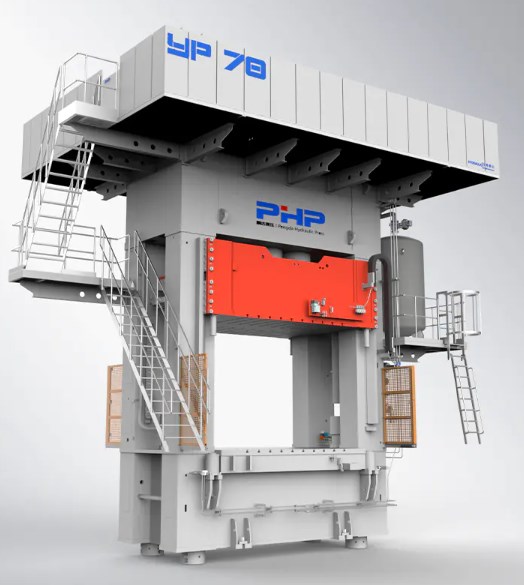
The key question is not “Which press is bigger?” but “How much usable molding force does the actual part and mold require?”
Content
- 1 1. What Does 500 Ton, 1000 Ton or 2000 Ton Mean?
- 2 2. 500 Ton vs 1000 Ton vs 2000 Ton: Quick Comparison
- 3 3. How Much Projected Area Can Each Press Handle?
- 4 4. When Is a 500-Ton SMC Press a Good Choice?
- 5 5. When Should You Move to a 1000-Ton SMC Press?
- 6 6. When Does a 2000-Ton SMC Press Make Sense?
- 7 7. Tonnage Is Only One Part of SMC Press Selection
- 8 Pressure and Position Control Matter as Much as Tonnage
- 9 8. Do Not Oversize the Press Without a Reason
- 10 9. Practical SMC Press Selection Checklist
- 11 10. Which SMC Press Should You Choose?
- 12 Recommended SMC Press Selection Process
- 13 SMC Hydraulic Press Solutions from Wuxi PengdaHZ
- 14 Frequently Asked Questions
- 14.1 Is a 2000-ton SMC press always better than a 1000-ton press?
- 14.2 How do I calculate the tonnage required for SMC molding?
- 14.3 Can I use a 500-ton press for automotive SMC parts?
- 14.4 How much area can a 1000-ton SMC press mold?
- 14.5 What happens if an SMC press is too small?
- 14.6 Besides tonnage, what should I compare between SMC presses?
- 14.7 Should I buy extra tonnage for future production?
1. What Does 500 Ton, 1000 Ton or 2000 Ton Mean?
Press tonnage refers to the maximum force the hydraulic press can apply during compression molding.
500T
Approx. 4,903 kN
Generally considered for relatively small to medium SMC molds and lower projected molding areas.
1000T
Approx. 9,807 kN
Provides a wider production envelope for medium and larger SMC parts and molds.
2000T
Approx. 19,613 kN
Used when large projected areas, heavy tooling or high molding-force requirements justify larger equipment.
Required Press Force = Projected Molding Area × Required Molding Pressure
Force should be calculated before choosing a nominal press tonnage.
For example, assume an SMC component has a projected area of 0.60 m² and requires a validated molding pressure of 10 MPa.
0.60 m² × 10 MPa = 6 MN
6,000 kN ÷ 9.80665 ≈ 612 metric tons-force
In this example, a nominal 500-ton press would not provide sufficient theoretical force, while a 1000-ton machine would provide considerably more capacity.
Important: Do not select a press exactly at the theoretical minimum. Actual engineering selection also needs to consider process margin, mold geometry, uneven loading, pressure losses and future products.
2. 500 Ton vs 1000 Ton vs 2000 Ton: Quick Comparison
| Press Size | Approx. Maximum Force | General Positioning | Typical Selection Reason |
| 500 Ton | 4,903 kN | Small to medium SMC components | Lower projected area, smaller molds and lower capital requirement |
| 1000 Ton | 9,807 kN | Medium to larger components | Greater production flexibility and higher force requirements |
| 2000 Ton | 19,613 kN | Large-area and high-force components | Large molds, larger projected areas and heavy-duty molding applications |
These categories are only general guidelines. A compact but complex component processed at high pressure can require more press force than a physically larger flat panel molded at lower pressure.
Part dimensions alone should never determine press tonnage. Projected area and required molding pressure are much more useful engineering inputs.
3. How Much Projected Area Can Each Press Handle?
One useful way to compare different press capacities is to calculate theoretical projected molding area at the same molding pressure.
Example at 10 MPa Molding Pressure
| Press Capacity | Theoretical Projected Area |
| 500 Ton | About 0.49 m² |
| 1000 Ton | About 0.98 m² |
| 2000 Ton | About 1.96 m² |
Example at 14 MPa Molding Pressure
| Press Capacity | Theoretical Projected Area |
| 500 Ton | About 0.35 m² |
| 1000 Ton | About 0.70 m² |
| 2000 Ton | About 1.40 m² |
These figures are theoretical calculation examples rather than recommended machine limits. Real molds may contain ribs, inserts, multiple cavities, asymmetric flow paths and uneven loading.
4. When Is a 500-Ton SMC Press a Good Choice?
A 500-ton hydraulic press can be an economical solution when the required molding force, mold size and projected area remain comfortably within its working range.
Possible Applications
- smaller electrical enclosures;
- composite equipment covers;
- small access panels;
- compact automotive composite parts;
- industrial housings;
- smaller BMC and SMC molded parts.
Advantages of a 500-Ton Press
- Lower initial equipment investment.
- Smaller machine footprint.
- Lower supporting infrastructure requirements.
- Good fit for manufacturers with relatively small molds.
The main limitation is future flexibility. If larger molds or higher-pressure products are likely to be introduced later, the available capacity may become restrictive.
5. When Should You Move to a 1000-Ton SMC Press?
A 1000-ton SMC press can provide a useful balance between equipment investment and manufacturing flexibility.
Compared with a 500-ton machine, it provides approximately twice the nominal pressing force and therefore supports a larger theoretical projected area at the same process pressure.
Possible Applications
- medium and larger composite covers;
- electrical and industrial enclosures;
- automotive panels and composite structures;
- larger SMC housings;
- construction composite components;
- manufacturers running multiple mold sizes.
Example Calculation
Consider a part with a projected area of 0.9 m² and required process pressure of 12 MPa.
0.9 m² × 12 MPa = 10.8 MN ≈ 1,101 metric tons-force
In this case, calling the product a “medium-sized SMC part” is not enough. A nominal 1000-ton machine would already be below the theoretical force requirement.
6. When Does a 2000-Ton SMC Press Make Sense?
A 2000-ton press becomes relevant when large projected molding areas, large tooling or high force requirements exceed the practical range of smaller presses.
Possible Applications
- large automotive exterior composite parts;
- battery and equipment covers;
- truck and transportation panels;
- large construction composite products;
- large-area SMC panels;
- multi-cavity molds with substantial total projected area.
The main advantage is not simply “more pressure.” A 2000-ton press provides a larger overall process envelope.
- larger usable projected molding area;
- larger and heavier molds;
- larger platen configurations;
- larger daylight and stroke options;
- higher-force molding capability;
- greater potential for future product expansion.
Larger tonnage also means greater equipment investment, floor-space requirements, foundation planning and supporting infrastructure. A 2000-ton machine is not automatically the most economical choice for smaller parts.
7. Tonnage Is Only One Part of SMC Press Selection
A common purchasing mistake is to ask only: “How much is a 1000-ton SMC press?”
Two presses with the same rated force can be very different in actual production suitability.
Platen and Table Size
The mold must physically fit on the press and still leave sufficient room for mounting, clamps, heating connections, ejector systems and maintenance access.
Daylight
Available daylight needs to accommodate mold height, part removal, loading requirements and any robot or automation clearance.
Stroke
Stroke requirements depend on mold construction, part depth, loading method, ejector design and part-removal method.
Mold Weight
Large SMC molds can be very heavy. The moving platen, press structure and mold-changing system should be evaluated according to actual tool weight.
Closing and Molding Speed
SMC compression molding commonly requires fast approach followed by controlled slow compression to allow material to flow through the mold before curing.
Pressure and Position Control Matter as Much as Tonnage
A press may have enough nominal tonnage but still produce unstable parts if its motion and pressure control are not repeatable.
Important control points include:
- fast approach speed;
- slow molding speed;
- speed transition position;
- pressure build-up rate;
- peak molding pressure;
- holding-pressure stability;
- ram position repeatability;
- controlled decompression;
- opening sequence;
- cycle-data recording.
For SMC production, the complete cycle should be considered as:
Position → Velocity → Pressure Build-Up → Holding Pressure → Cure → Decompression → Opening
8. Do Not Oversize the Press Without a Reason
More tonnage is not automatically better.
Oversized Press
Can increase purchase cost, floor space, installed power, foundation requirements and maintenance cost.
Undersized Press
May lack pressure margin, restrict future molds and force the machine to operate continually near maximum capacity.
Correctly Sized Press
Provides sufficient process reserve while avoiding unnecessary capital and infrastructure cost.
9. Practical SMC Press Selection Checklist
| Parameter | Why It Matters |
| Finished Part Dimensions | Defines general component size |
| Projected Molding Area | Fundamental input for force calculation |
| Required Molding Pressure | Determines required press force |
| SMC Formulation | Affects material flow and process pressure |
| Mold Length and Width | Determines required platen dimensions |
| Mold Height | Affects required daylight |
| Mold Weight | Affects structure and mold handling |
| Part Depth | Influences stroke requirement |
| Charge Coverage | Influences flow distance |
| Target Cycle Time | Affects speed and productivity requirements |
| Annual Volume | Influences automation requirements |
| Future Products | Determines useful reserve capacity |
10. Which SMC Press Should You Choose?
Choose 500 Ton When
Required force, projected area and mold dimensions are relatively limited and future expansion requirements are modest.
Choose 1000 Ton When
You need a wider production range, larger molds or significantly more compression force while remaining in a medium-capacity equipment category.
Choose 2000 Ton When
Large projected areas, heavy molds, large panels or higher molding-force requirements justify large-capacity equipment.
These are not fixed boundaries. The actual part and tooling should always be calculated before press size is finalized.
Recommended SMC Press Selection Process
1
Determine Projected Molding Area Calculate the effective projected area of the part or total cavity area.2
Confirm Required Molding Pressure Use validated material and process information rather than an arbitrary pressure value.3
Calculate Theoretical Force Multiply projected area by required molding pressure.4
Add Engineering Margin Consider mold geometry, uneven loading, process variation and future production requirements.5
Verify Platen Size Confirm the complete mold can be installed and serviced correctly.6
Verify Stroke, Daylight and Mold Weight Check physical tooling and part-removal requirements.7
Check Process Control Confirm closing speed, pressure control, position control, repeatability and target cycle time.SMC Hydraulic Press Solutions from Wuxi PengdaHZ
Wuxi PengdaHZ Intelligent Equipment Co., Ltd. develops hydraulic press systems for SMC, BMC and composite compression molding applications.
Instead of selecting equipment only by a nominal rating such as 500T, 1000T or 2000T, press configuration should be evaluated around the actual molded part, mold and production process.
For initial equipment evaluation, useful information includes part dimensions, projected area, SMC material, required molding pressure, mold size and weight, required stroke and daylight, target cycle time, production capacity and automation requirements.
These parameters help determine the appropriate press tonnage, platen size, stroke, hydraulic configuration, process-control system and automation solution.
Visit wuxipd.com for more information about customized SMC compression molding presses.
Frequently Asked Questions
Is a 2000-ton SMC press always better than a 1000-ton press?
No. A 2000-ton press provides more maximum force, but the correct machine depends on projected molding area, process pressure, mold size, stroke, daylight, production volume and future product requirements.
How do I calculate the tonnage required for SMC molding?
Start with the basic relationship: required force equals projected molding area multiplied by required molding pressure. The result should then be evaluated with an appropriate engineering margin.
Can I use a 500-ton press for automotive SMC parts?
Yes, potentially. The term “automotive part” does not determine press tonnage. The actual projected area, required pressure, mold size and process requirements need to be calculated.
How much area can a 1000-ton SMC press mold?
There is no single fixed value because molding pressure varies. At an illustrative 10 MPa pressure, 1000 metric tons-force corresponds theoretically to approximately 0.98 m² of projected area before engineering margin.
What happens if an SMC press is too small?
The process may lack sufficient force or operating margin and may restrict larger future molds. In some processes this can contribute to poor filling or insufficient compaction.
Besides tonnage, what should I compare between SMC presses?
Compare platen size, daylight, stroke, mold capacity, closing speed, molding speed, pressure accuracy, position repeatability, platen parallelism, automation interfaces and process-data recording capability.
Should I buy extra tonnage for future production?
A reasonable reserve can be useful when future products are known, but excessive oversizing increases equipment and infrastructure costs. Future mold dimensions and expected process pressures should be evaluated first.


