
 English
 中文简体
中文简体 Español
 Português
 Deutsch
 русский
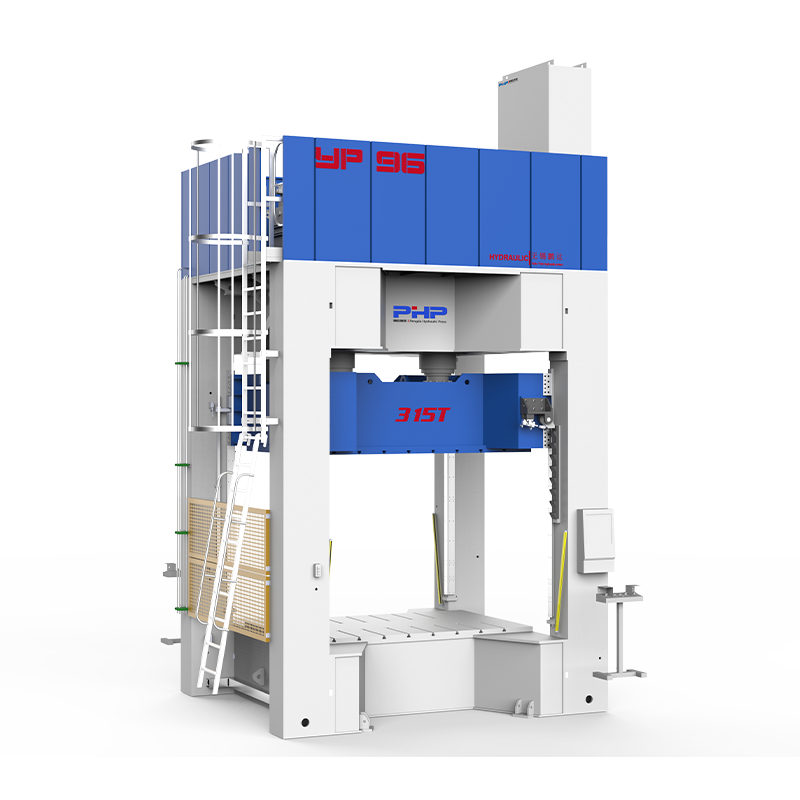
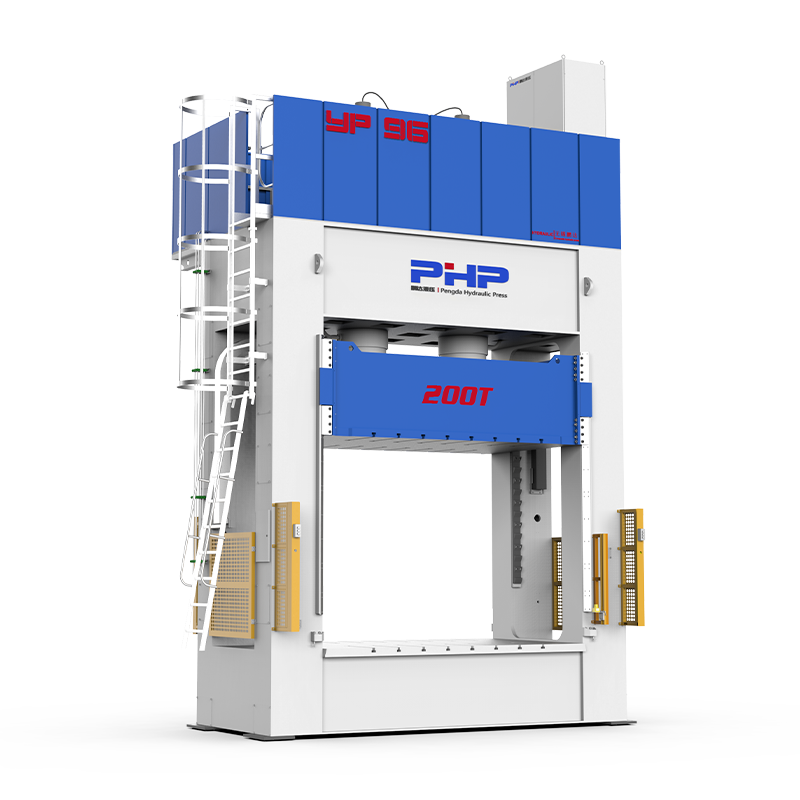


Matching an SMC mold with a hydraulic press should start with the mold requirements—not with the press catalog.
A press may have enough nominal tonnage but still be unsuitable because its platen is too small, daylight is insufficient, the heating system cannot maintain uniform mold temperature, or its closing profile does not match the SMC material's flow and cure behavior.
Core Matching Principle:
Start with the mold requirements, then work backward to the hydraulic press specification—not the other way around.
Start with the mold requirements, then work backward to the hydraulic press specification—not the other way around.
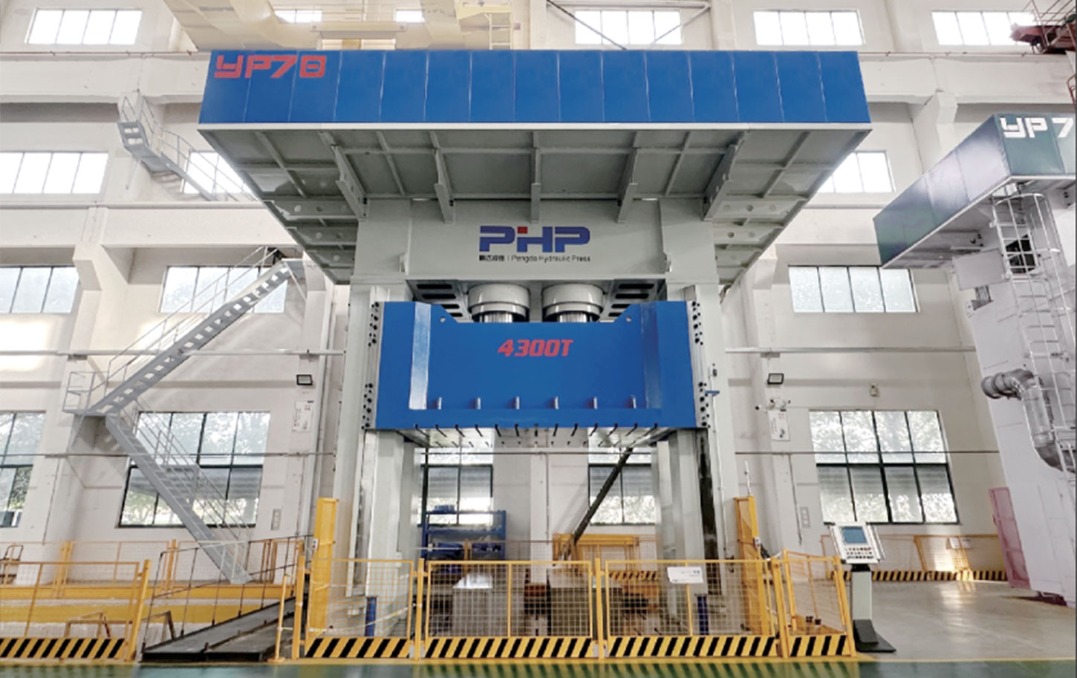
For a new SMC project, the most reliable approach is to convert the mold requirements into a press specification step by step.
Content
- 1 1. Calculate Required SMC Press Tonnage from Projected Area and Molding Pressure
- 2 2. Verify Platen Size, Daylight, Mold Mounting, Parallelism, and Deflection
- 3 3. Match Mold Heating Zones, Temperature Uniformity, Vacuum, and Venting
- 4 4. Size Ejection Force and Match Press Speed to the SMC Cycle
- 5 5. Check Controls, Automation Interfaces, and Future Mold Requirements
- 6 Build the Press Specification Around the Mold
- 7 FAQ
- 7.1 How do I calculate the required hydraulic press tonnage for an SMC mold?
- 7.2 What platen size and daylight dimensions should I check before mounting an SMC mold?
- 7.3 Why is platen parallelism critical for SMC molding?
- 7.4 How can I match heating platen temperature uniformity to my SMC mold requirements?
- 7.5 What ejection force should I specify for an SMC mold?
- 7.6 How should I match press closing speed to SMC material flow and cure behavior?
- 7.7 Should I retrofit an existing hydraulic press or select a new servo hydraulic press for SMC molding?
1. Calculate Required SMC Press Tonnage from Projected Area and Molding Pressure
Press tonnage is the first parameter to calculate because it determines whether sufficient force can be applied across the entire mold cavity.
A practical starting formula is:
Required Press Force = Total Projected Area × Required Molding Pressure
When working in U.S. units:
Press Force (short tons) = Projected Area (in²) × Molding Pressure (psi) ÷ 2,000
Example Tonnage Calculation
Suppose an SMC component has a total projected molding area of 1,500 in² and the process requires 1,000 psi of molding pressure:
1,500 × 1,000 ÷ 2,000 = 750 short tons
A press should therefore be selected above this theoretical minimum, with an appropriate engineering margin.
Do Not Treat Molding Pressure as a Fixed Number
The difficult part is determining the correct molding pressure. SMC compression molding pressure can change significantly depending on the material formulation and the geometry of the molded component.
Factors that can increase filling resistance include:
- Deep ribs and bosses
- Long material flow paths
- Thin-wall sections
- High glass-fiber content
- Complex cavity features
- Inserts and local reinforcement
- Low initial charge coverage
Important: A molding pressure successfully used for a flat SMC panel should not automatically be applied to a structural component with deep ribs and long flow distances.
For a multi-cavity mold, calculate the combined projected area of all cavities rather than the area of one component. Flow balance and unequal filling resistance should also be considered.
Check Load Position, Not Just Total Tonnage
Force distribution matters as much as total force. If the molding area is significantly offset from the center of the press, the machine may experience eccentric loading.
This can contribute to:
- Uneven pressure distribution
- Excessive flash on one side
- Incomplete filling on another side
- Additional stress on guides and platens
- Accelerated mold wear
The objective is not simply to buy more tons. The press must supply sufficient force while distributing that force uniformly across the actual mold footprint.
2. Verify Platen Size, Daylight, Mold Mounting, Parallelism, and Deflection
After tonnage, compare the physical mold dimensions with the usable working space of the hydraulic press.
Platen Size Must Include Installation Space
The mold length and width must fit within the usable upper and lower platen area. However, do not compare only the mold footprint with the published platen dimensions.
Additional space may be required for:
- Mold clamps and T-slots
- Insulation plates
- Heating connections
- Thermocouple wiring
- Hydraulic or pneumatic lines
- Vacuum connections
- Mold handling equipment
A mold that technically fits between the platen edges may still be difficult or unsafe to install if there is insufficient room for clamps, wiring, hoses, and maintenance access.
Check Closed Mold Height, Daylight, and Stroke Together
Daylight is the maximum available distance between the platens when the press is fully open.
It must accommodate both the mold and the clearance required for part removal and ejection.
Required Daylight > Closed Mold Height + Opening / Ejection Clearance
Deep SMC components or molds with long ejector movement may require considerably more opening space than a shallow panel mold.
The press stroke must also be sufficient to move from the closed molding position to the required unloading position.
Confirm Mold Mounting Interfaces
Before ordering the machine, compare:
- T-slot locations
- Mounting bolt patterns
- Ejector openings
- Mold centering features
- Hydraulic ejector connections
Why Platen Parallelism Matters
SMC tooling requires uniform closing conditions. If the upper and lower platens are not sufficiently parallel, one side of the mold can close earlier than the other.
The resulting problems may include:
- Uneven part thickness
- Inconsistent flash
- Accelerated shear-edge wear
- Uneven cavity pressure
Parallelism should therefore be evaluated across the usable platen area and, where appropriate, under operating load rather than relying only on an unloaded measurement.
Platen Deflection Under Load Is Equally Important
Static parallelism does not necessarily mean that the platen will remain flat at full molding force.
Insufficient platen rigidity can allow the structure to deflect during compression. This is especially important for:
- Large-area SMC panels
- Thin-wall components
- Multi-cavity molds
- Molds extending close to the platen edges
Platen stiffness, press frame rigidity, and nominal tonnage should therefore be evaluated as one system.
3. Match Mold Heating Zones, Temperature Uniformity, Vacuum, and Venting
An SMC press should not be selected simply because its heating system can reach the required maximum temperature.
The more important question is whether the system can maintain the required temperature distribution across the actual mold.
Temperature Uniformity Matters More Than Maximum Temperature
SMC molds normally operate at elevated temperatures to initiate and complete thermoset curing. Depending on material formulation and process requirements, mold temperatures are often approximately 130–165°C.
The final setpoint, however, should always follow material supplier recommendations and actual process trials.
If one area of the mold becomes considerably hotter than another, the SMC can begin to gel in the hotter area while material is still flowing into another section.
This may contribute to:
- Incomplete filling
- Surface defects
- Uneven cure
- Internal stress
- Cycle-to-cycle inconsistency
Heating System Parameters to Verify
- Total heating power
- Number of independently controlled heating zones
- Heater placement
- Thermocouple quantity and location
- Upper and lower mold temperature requirements
- Warm-up time
- Temperature recovery between cycles
Engineering Focus: Do not only ask whether the press can reach 150°C. Ask whether the heating system can maintain the required temperature profile across the entire effective molding surface.
Match Vacuum and Venting to the Closing Sequence
Air trapped inside the cavity during closing can cause voids, burn marks, poor surfaces, or incomplete filling.
If the mold uses vacuum-assisted molding, confirm that the press control system can coordinate:
- Mold closing position
- Vacuum activation
- Venting sequence
- Pressure build-up
Shear edges create another interaction between mold and machine. Charge position, shear-edge engagement, venting, and closing speed determine when the cavity becomes sealed and when full molding pressure should begin.
For this reason, the mold designer, SMC material supplier, and press engineer should agree on the required closing profile.
4. Size Ejection Force and Match Press Speed to the SMC Cycle
Ejection requirements depend heavily on the geometry and surface condition of the finished component.
A large shallow panel with sufficient draft may release easily. A deep component wrapped around cores and vertical walls may require substantially more ejector force.
Factors Affecting Required Ejection Force
- Vertical mold contact area
- Mold shrinkage
- Draft angle
- Surface texture
- Mold temperature
- Release-agent system
- Ejector pin or ejector plate arrangement
- Component stiffness
- Weight of the ejector assembly
Because these variables interact, there is no universal ejection-force formula suitable for every SMC mold.
Existing tooling data, mold calculations, and trial results are usually more reliable. The press ejector should then provide adequate force, stroke, controllable speed, and an engineering safety margin.
Match the Entire Press Speed Profile
For SMC production, maximum ram speed alone tells very little about process suitability.
Typical SMC Press Motion Sequence:
Fast Approach → Controlled Slow Closing → Material Flow → Pressure Build-Up → Cure / Hold → Decompression → Opening → Ejection
Fast Approach → Controlled Slow Closing → Material Flow → Pressure Build-Up → Cure / Hold → Decompression → Opening → Ejection
Fast approach reduces non-productive cycle time while the mold is still away from the SMC charge.
As the mold reaches the charge, however, the machine should transition to a controlled molding speed. The material needs sufficient time to flow through the cavity while air escapes through the venting or vacuum system.
Closing Too Slowly
```
The SMC may begin to gel and cure before the cavity is completely filled.
Closing Too Quickly
```The process may trap air, create excessive flash, disturb material flow, or affect fiber distribution.
The hydraulic system therefore needs more than high maximum speed. It needs repeatable transitions between rapid approach, molding speed, pressure build-up, pressure holding, and decompression.
Accumulator-assisted circuits or high-response servo hydraulic systems may be useful where rapid movement and precise process transitions are required.
5. Check Controls, Automation Interfaces, and Future Mold Requirements
Once the basic mechanical requirements are confirmed, evaluate whether the press can support the mold over its expected production life.
Conventional Hydraulic vs. Servo Hydraulic
A conventional hydraulic press can be suitable for stable, high-load SMC production. A servo hydraulic system can provide more flexible control of pressure and speed while potentially reducing power consumption during partial-load, holding, and standby conditions.
The choice should be based on the actual molding cycle, production hours, automation level, and energy cost—not on servo technology alone.
When Is Retrofitting an Existing Press Practical?
Before considering a control or hydraulic retrofit, confirm that the existing machine already provides sufficient:
- Tonnage
- Platen area
- Structural rigidity
- Daylight
- Ram stroke
- Ejection capability
Retrofit Limitation: If the platen is too small, the frame is not rigid enough, or the available tonnage is insufficient, upgrading the PLC or hydraulic controls will not correct the basic mechanical mismatch.
Consider Automation and Future Tooling
Automatic SMC charge loading, robotic unloading, light curtains, two-hand controls, vacuum systems, ejectors, and peripheral equipment all require appropriate control interfaces and safety interlocks.
Future molds should also be considered. Larger or multi-cavity molds may require additional:
- Platen area
- Tonnage
- Frame rigidity
- Heating-zone capacity
- Parallelism control
A press that only satisfies today's minimum specification can become a production limitation when the next mold arrives.
Build the Press Specification Around the Mold
The safest way to select an SMC hydraulic press is to prepare a mold-to-press matching sheet before requesting equipment quotations.
| Parameter | What to Confirm |
|---|---|
| Projected Area | Total molding area including all cavities |
| Press Tonnage | Required molding pressure plus engineering margin |
| Platen Size | Mold footprint plus mounting and service space |
| Closed Mold Height | Compatibility with press minimum / maximum working height |
| Daylight & Stroke | Enough clearance for opening, removal, and ejection |
| Heating | Temperature, heating zones, power, and uniformity |
| Ejection | Force, stroke, speed, and ejector interface |
| Speed Profile | Fast approach, molding speed, holding, and opening |
| Auxiliary Systems | Vacuum, automation, safety, and robot interfaces |
These parameters allow the press manufacturer to evaluate the complete molding process rather than recommending a machine from tonnage alone.
Need to Match an SMC Mold with a Hydraulic Press?
```At Wuxi PengdaHZ Intelligent Equipment Co., Ltd., SMC hydraulic press selection can be evaluated according to mold dimensions, projected area, required molding pressure, heating configuration, working stroke, ejector requirements, and production cycle.
Providing these mold parameters before equipment design helps reduce later tooling modifications and makes it easier to establish a stable SMC molding process during commissioning.
```FAQ
How do I calculate the required hydraulic press tonnage for an SMC mold?
Multiply the total projected molding area by the required SMC molding pressure. In U.S. units:
Press tonnage = Projected Area (in²) × Pressure (psi) ÷ 2,000.
An appropriate engineering margin should then be added, while eccentric loading and multi-cavity pressure distribution should also be checked.
What platen size and daylight dimensions should I check before mounting an SMC mold?
The usable platen must accommodate the mold footprint plus clamps, insulation, heaters, wiring, and service connections. Daylight must exceed the closed mold height while leaving sufficient space for mold opening, part removal, and ejection.
Why is platen parallelism critical for SMC molding?
Poor platen parallelism can cause uneven mold closure, variable part thickness, inconsistent flash, shear-edge wear, and uneven cavity pressure. The required tolerance should be established according to platen size, mold design, part requirements, and loaded press behavior rather than relying on one universal value.
How can I match heating platen temperature uniformity to my SMC mold requirements?
Start with the temperature range and allowable variation required by the SMC material and mold. Then evaluate heater power, heating-zone arrangement, thermocouple locations, mold dimensions, and heat loss. Temperature distribution across the molding surface is generally more important than maximum temperature alone.
What ejection force should I specify for an SMC mold?
Ejection force depends on part geometry, vertical contact area, draft angle, mold shrinkage, surface condition, mold temperature, ejector design, and friction. It is best established using mold calculations, comparable tooling data, or production trials, followed by an appropriate engineering margin.
How should I match press closing speed to SMC material flow and cure behavior?
Use fast travel before the mold reaches the charge, then transition to a controlled molding speed that gives the SMC enough time to flow and allows trapped air to escape before significant gelation occurs. Pressure build-up, curing, decompression, opening, and ejection should also be controllable as separate process stages.
Should I retrofit an existing hydraulic press or select a new servo hydraulic press for SMC molding?
A retrofit can make sense when the existing press already has sufficient tonnage, platen area, rigidity, daylight, stroke, and mold interfaces. If these fundamental mechanical specifications are inadequate, a new press is generally more practical. Servo hydraulic technology is particularly useful when precise pressure and speed control, automation, recipe flexibility, or reduced energy consumption are important.


