
 English
 中文简体
 Español
 Português
 Deutsch
 русский
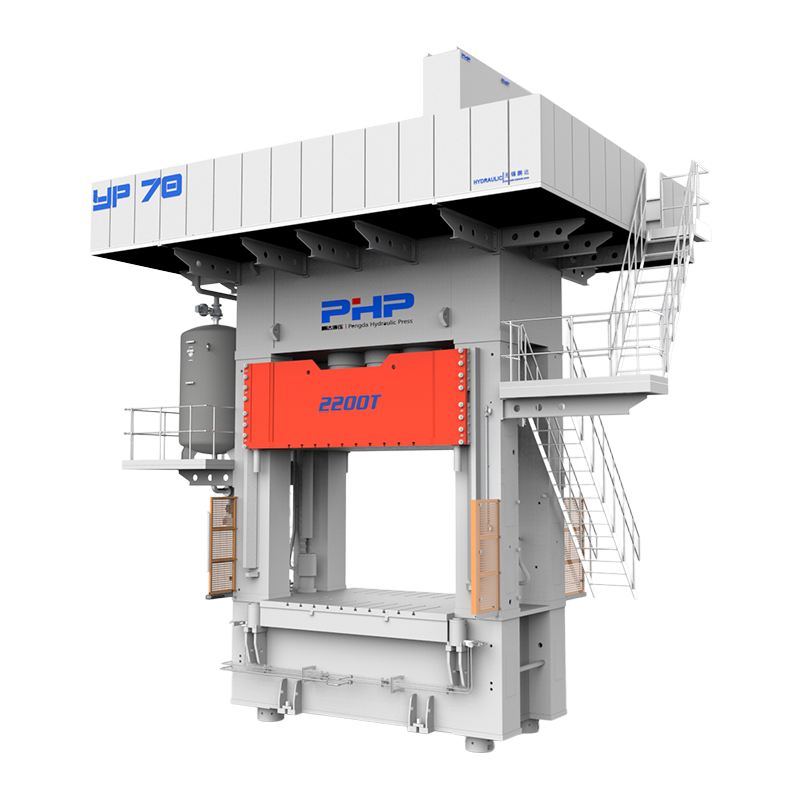
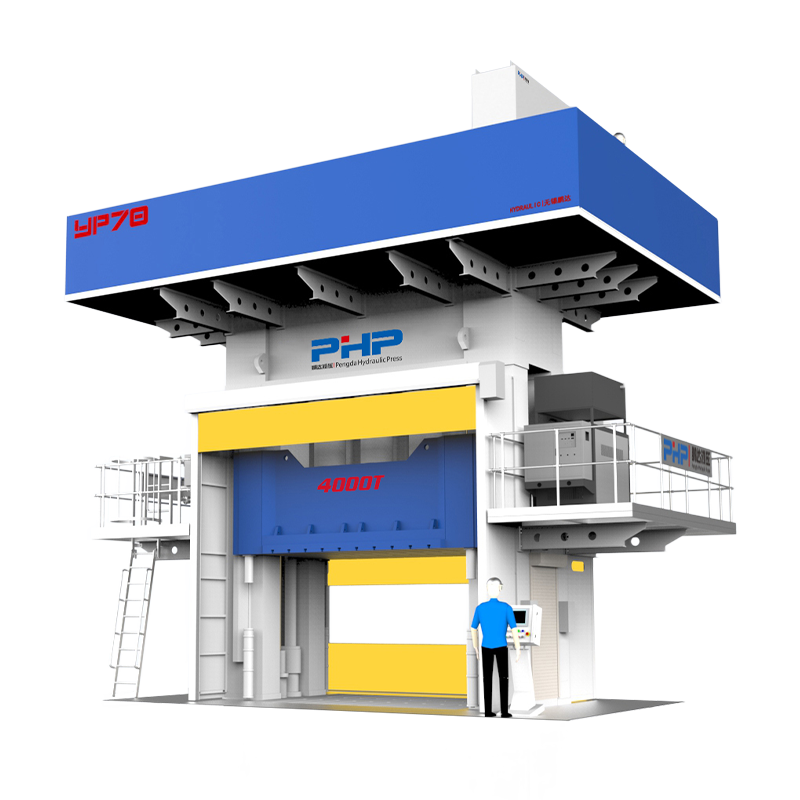
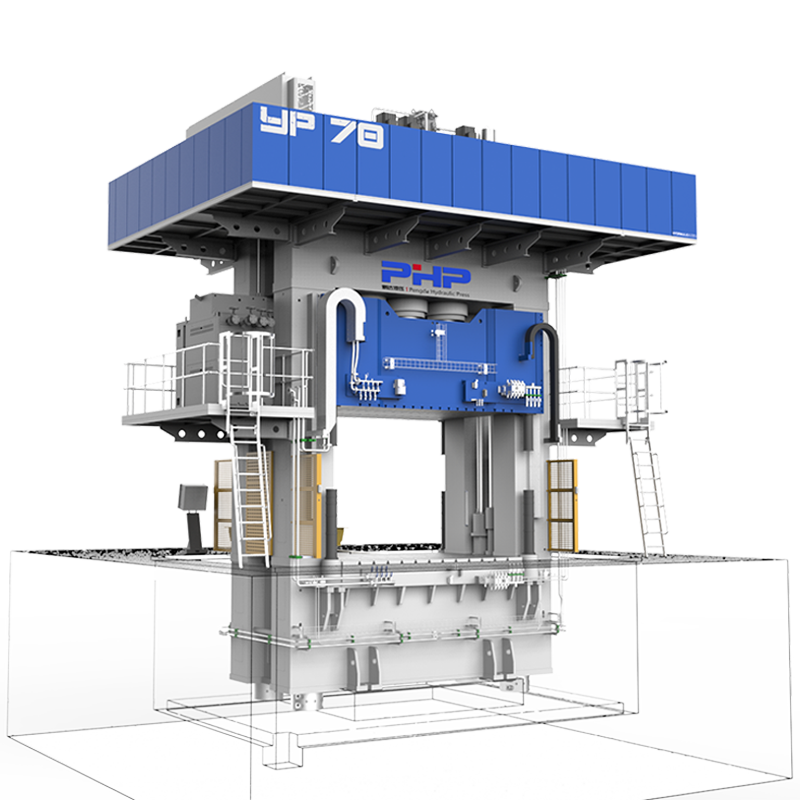
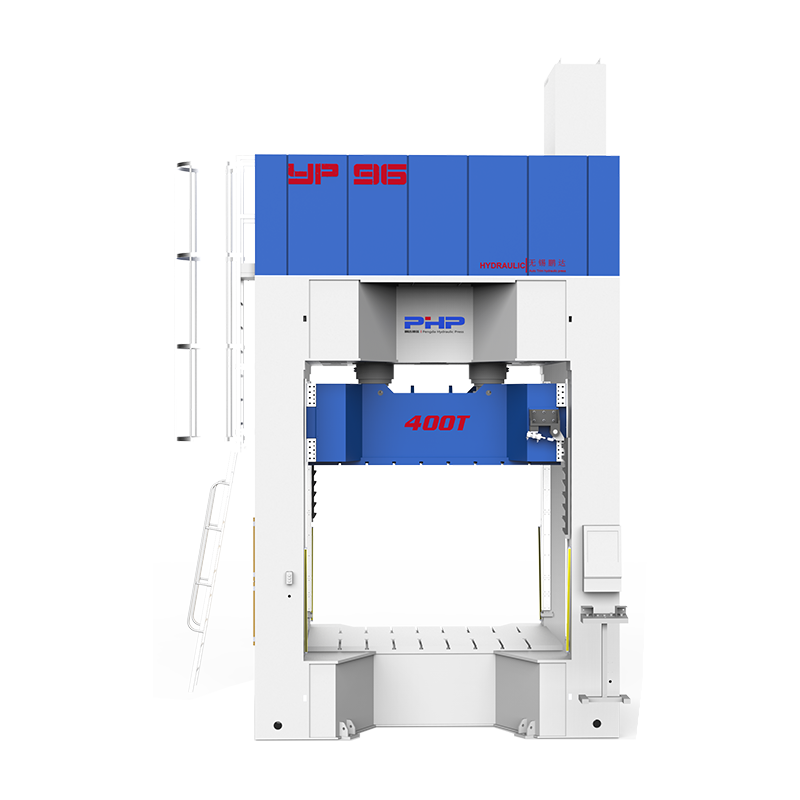


SMC Press Structural Engineering
Large SMC parts are molded between precision tools, but those tools are supported by real machine structures that deform elastically under load. Even when a hydraulic press has sufficient tonnage, the upper and lower platens can bend slightly as molding force builds.
For small tools, this movement may have limited influence. For large automotive panels, battery covers, electrical enclosures and other wide SMC components, however, platen deflection can change the effective mold gap across a large working area and influence thickness, flash, filling and dimensional repeatability.
Content
- 1 1. What Is Platen Deflection?
- 2 2. Platen Flatness and Platen Deflection Are Different
- 3 3. Why Large SMC Molds Make Platen Deflection More Important
- 4 4. Total Tonnage Does Not Tell You How the Platen Is Loaded
- 5 5. Centered Load vs Edge Load
- 6 6. How Platen Deflection Changes the Local Mold Gap
- 7 7. Center Deflection and Edge Deflection Are Different Problems
- 8 8. How Platen Deflection Can Cause SMC Thickness Variation
- 9 9. How Platen Deflection Can Contribute to Flash
- 10 10. Platen Deflection Can Also Affect Local Filling and Pressure
- 11 11. Multi-Cavity SMC Molds Are Sensitive to Platen Load Distribution
- 12 12. Mold Footprint Changes the Structural Response
- 13 13. Mold Position on the Platen Matters
- 14 14. Upper and Lower Platen Deflection Must Be Considered Together
- 15 15. Measuring One Point Is Not Enough
- 16 16. Platen Tilt and Platen Bending Are Different
- 17 17. A Thick Platen Is Not Automatically a Stiff Platen
- 18 18. Cylinder Position Also Influences Platen Loading
- 19 19. How FEA Is Used to Evaluate Platen Deflection
- 20 20. Practical Example: Same Tonnage, Different Mold Footprints
- 21 21. Upper and Lower Platen Deflection Can Add Together
- 22 22. What Platen Deflection Data Should Buyers Ask For?
- 23 23. Does an SMC Press Need Zero Platen Deflection?
- 24 24. Platen Deflection Selection Checklist
- 25 Evaluate the Platen Under the Real Mold Footprint
- 26 Large SMC Hydraulic Press Solutions from Wuxi PengdaHZ
- 27 Frequently Asked Questions
- 27.1 What is platen deflection in an SMC hydraulic press?
- 27.2 Is platen flatness the same as platen stiffness?
- 27.3 Why are large platens more sensitive to deflection?
- 27.4 Can platen deflection cause SMC thickness variation?
- 27.5 Can platen deflection cause flash?
- 27.6 Why does mold position on the platen matter?
- 27.7 How does mold footprint affect platen deflection?
- 27.8 What is the difference between platen tilt and platen bending?
- 27.9 Should both upper and lower platen deflection be considered?
- 27.10 How is platen deflection evaluated?
- 27.11 Is zero platen deflection possible?
1. What Is Platen Deflection?
A hydraulic press platen is not perfectly rigid. When force is transmitted through a mold into the working surface, the platen experiences elastic bending.
Depending on the load position and support arrangement, this deformation can appear as:
- center bending;
- edge movement;
- local bowing;
- one-sided deflection;
- combined bending and rotation.
Applied Molding Force→Platen Bending→Loaded Surface Changes→Effective Mold Gap Changes
A platen can be flat when unloaded and still bend when molding force is applied.
2. Platen Flatness and Platen Deflection Are Different
Flatness, parallelism and deflection are often discussed together, but they describe different machine conditions.
| Parameter | What It Describes |
| Platen Flatness | The geometric condition of one platen surface, usually measured without molding load |
| Platen Parallelism | The relationship between the upper and lower platen surfaces |
| Platen Deflection | Elastic bending of a platen when force is applied |
| Loaded Parallelism | The relative upper-to-lower platen condition while production force is present |
Good machining flatness does not automatically mean low deflection under production load.
3. Why Large SMC Molds Make Platen Deflection More Important
Large SMC molds usually require a wider platen, larger mold footprint and greater total molding force.
As the structural span becomes larger, controlling bending becomes more difficult.
Large Working Area+High Molding Force+Long Structural Span=Greater Deflection Challenge
Applications that can be especially sensitive include:
- large automotive SMC panels;
- EV battery covers;
- large electrical cabinets and enclosures;
- large structural composite covers;
- multi-cavity molds spread across a wide platen.
4. Total Tonnage Does Not Tell You How the Platen Is Loaded
A 1500-ton or 2000-ton press rating describes total available force, but that force is not necessarily distributed evenly over the complete platen.
The mold may load:
- mainly the platen center;
- one side of the platen;
- two separated cavity zones;
- a relatively small footprint inside a much larger working table.
Platen Response Depends on Force + Load Area + Load Position + Support Geometry
The same total tonnage can produce different platen deformation when the mold footprint or load position changes.
5. Centered Load vs Edge Load
Mold position can strongly influence platen bending.
Case A Centered Mold
The principal mold load acts close to the structural center of the platen.
Case B Edge-Biased Mold
The same total force acts closer to one edge, increasing local bending and rotational effects.
A mold may physically fit on the platen and still create an unfavorable structural condition if its main load acts too close to an edge or outside the most rigid working region.
“The mold fits” is not the same as “the mold is structurally well positioned.”
6. How Platen Deflection Changes the Local Mold Gap
The mold itself may be machined accurately, but the platen supporting it can change shape under production load.
When the platen bends, the actual relationship between upper and lower mold surfaces may change locally.
Platen Deflection→Local Mold Separation Changes→Local Compression Changes→Part Condition Changes
The mold can be dimensionally correct while the loaded platen underneath it changes the effective cavity geometry.
7. Center Deflection and Edge Deflection Are Different Problems
Maximum platen deflection does not always occur at the same location.
Under a large centered load, the platen may experience more bending toward the middle of the working area.
Under an edge-biased or eccentric load, the deformation pattern may become more asymmetric, with one side moving more than the other.
Centered Loading Local bending may dominate.
Eccentric Loading Bending and rotation may occur together.
Do not ask only how much the platen deflects. Ask where the maximum deflection occurs.
8. How Platen Deflection Can Cause SMC Thickness Variation
SMC part thickness is closely related to final tool geometry and local compression.
If the loaded platen shape changes across the mold, local cavity gap can also change.
Platen Deflection→Uneven Mold Gap→Different Local Compression→Thickness Variation
Possible patterns include:
- center-to-edge thickness difference;
- left-to-right thickness difference;
- one corner consistently thicker;
- local thickness changes around highly loaded regions.
Thickness variation is not proof of platen deflection. Charge weight, charge pattern, mold machining, temperature, material flow and press parallelism should also be checked.
9. How Platen Deflection Can Contribute to Flash
Flash develops when material escapes through an available gap around the mold parting line.
If platen bending increases the local parting-line gap in one region, that area can become more sensitive to flash.
Local Platen Bending→Larger Local Gap→Easier Material Escape→Possible Flash Increase
This may be particularly noticeable in:
- large SMC panels;
- long parting lines;
- edge-loaded molds;
- asymmetric tooling.
Excessive charge, mold wear, excessive pressure or poor parting-line condition can also cause flash, so structural deflection should be treated as one possible contributor.
10. Platen Deflection Can Also Affect Local Filling and Pressure
Uneven mold support can influence more than final thickness.
If one side of a mold closes more effectively while another side remains at a slightly larger local gap, material flow and pressure distribution can become less uniform.
Side A Higher Local Compression
Possible flash or higher local loading.
Side B Lower Local Compression
Possible poor filling, weaker compaction or thickness increase.
A repeated pattern of flash on one side and incomplete filling on the opposite side can therefore justify checking platen and loaded-parallelism behavior.
11. Multi-Cavity SMC Molds Are Sensitive to Platen Load Distribution
Multi-cavity tooling introduces several separate load zones across the platen.
If cavities are placed at different distances from the platen center or require different molding forces, local platen support conditions can vary.
Cavity A Near Platen Center
Located in a relatively well-supported structural region.
Cavity B Near Platen Edge
May experience a different local stiffness condition.
Multi-cavity balance is not only a material-flow problem; it can also be a platen-load problem.
If cavity-to-cavity quality differences remain after material and temperature variables have been stabilized, local platen behavior may deserve investigation.
12. Mold Footprint Changes the Structural Response
Two molds using the same total force can load the platen very differently.
Large Footprint Load Distributed Over a Wider Area
Force is transferred through a larger part of the platen surface.
Small Footprint More Concentrated Load
The same total force can create greater local structural demand.
For this reason, press structural analysis should consider the actual mold footprint rather than treating every application as a uniform full-platen load.
13. Mold Position on the Platen Matters
Mold placement can change the distance between the load and the platen support structure.
Moving a mold toward one edge can increase:
- local bending;
- angular deformation;
- guide reaction;
- eccentric frame loading.
Where practical, large SMC molds should be positioned with the main load region close to the intended structural center of the press.
14. Upper and Lower Platen Deflection Must Be Considered Together
The moving platen is not the only structure that can bend.
Both the upper and lower working surfaces can deform under load.
Part quality depends on their relative movement.
Upper Platen Elastic Movement
+
Lower Platen Elastic Movement
=
Result Relative Mold-Gap Change
As a simplified illustration, if one platen moves 0.25 mm and the opposite structure moves 0.20 mm in a direction that increases local cavity separation, the relative change can approach 0.45 mm.
This is an illustrative example only. Real deformation direction and magnitude depend on the actual platen, frame, support and mold geometry.
Part quality depends on relative mold displacement, not the deflection of one platen alone.
15. Measuring One Point Is Not Enough
A single displacement measurement at platen center may not capture the full deformation pattern.
Depending on the mold and application, useful measurement locations can include:
- platen center;
- four corners;
- locations beneath major cavity zones;
- regions near the mold edge;
- areas with historically unstable thickness or flash.
Engineering verification may use suitable displacement measurement methods such as:
- dial indicators;
- linear displacement sensors;
- laser-based measurement;
- multi-point electronic monitoring.
16. Platen Tilt and Platen Bending Are Different
A loaded platen can lose geometric stability in more than one way.
Tilt Overall Angular Movement
One side of the platen moves relative to the other, changing overall parallelism.
Bending Local Shape Change
The platen surface bows even if the average platen orientation remains approximately parallel.
Tilt ≠ Bend
A platen can remain approximately parallel overall while still bending locally beneath the mold.
17. A Thick Platen Is Not Automatically a Stiff Platen
Plate thickness is important, but it is only one element of platen design.
Actual stiffness can also depend on:
- internal rib arrangement;
- box-section geometry;
- material properties;
- support spacing;
- cylinder-force locations;
- frame connection points;
- mold footprint;
- load path through the structure.
Platen design matters more than thickness alone.
18. Cylinder Position Also Influences Platen Loading
The location and number of hydraulic cylinders influence how force is introduced into the platen.
A center-cylinder design and a multi-cylinder large-format press create different structural load paths.
Multiple cylinders can help distribute force over a wider structure, but they also introduce additional requirements for:
- synchronization;
- position control;
- load balancing;
- structural coordination.
Cylinder count alone does not determine platen stiffness. Platen structure, cylinder spacing, guide system and mold load distribution must be evaluated together.
19. How FEA Is Used to Evaluate Platen Deflection
Finite element analysis can help evaluate platen behavior before a large SMC press is built.
Useful load cases may include:
Case 01 Centered Load
Checks central bending and general platen response.
Case 02 Real Mold Footprint
Evaluates deformation under a representative production load area.
Case 03 Edge Load
Checks local bending near less-supported platen regions.
Case 04 Eccentric Load
Evaluates bending combined with platen rotation.
Useful outputs can include:
A realistic mold footprint is usually more informative than an idealized uniform load across the entire platen.
20. Practical Example: Same Tonnage, Different Mold Footprints
Consider two hypothetical molds using the same total molding force.
Mold A
Applied Force 1200 T
Mold Footprint 1800 × 1200 mm
Position Centered
Mold B
Applied Force 1200 T
Mold Footprint 900 × 600 mm
Position Offset Toward One Side
Both molds use the same total tonnage, but the concentrated and offset load of Mold B can create a very different platen-deflection pattern.
Same tonnage does not mean the same platen deformation.
The values above are illustrative only. Actual deformation depends on platen design, mold footprint, load distribution, support geometry and frame structure.
21. Upper and Lower Platen Deflection Can Add Together
It is easy to focus only on the moving platen, but the final cavity condition depends on both sides of the tool.
Upper Platen Deflection 0.25 mm
+
Lower Platen Deflection 0.20 mm
=
Illustrative Relative Gap Change 0.45 mm
The actual relative change could be smaller or larger depending on deformation direction. The important principle is that upper and lower structure should be evaluated as a system.
22. What Platen Deflection Data Should Buyers Ask For?
Large SMC press buyers should avoid evaluating platen rigidity from a single unexplained number.
| Question | Why It Matters |
| At what force was deflection evaluated? | Deflection changes with applied load |
| What mold footprint was assumed? | Load area strongly affects bending |
| Was the load centered or eccentric? | Load position changes structural response |
| Where was maximum deflection measured? | Center, edge and local mold zones may behave differently |
| Were both upper and lower platens evaluated? | Relative mold movement affects the part |
| Was loaded parallelism checked? | Overall tilt and local bending both matter |
| Was the value calculated or physically tested? | Clarifies whether the number comes from FEA, measurement or both |
23. Does an SMC Press Need Zero Platen Deflection?
No real platen has infinite stiffness, so zero elastic deformation is not a realistic design target.
The practical objective is:
Deflection Small Enough and Repeatable Enough for the Mold and Part Tolerance
An unnecessarily massive platen can increase:
- machine weight;
- moving mass;
- material cost;
- hydraulic motion demand;
- overall equipment cost.
The goal is required rigidity—not infinite rigidity.
24. Platen Deflection Selection Checklist
Mold Footprint
- How large is the mold support area?
- Is the footprint concentrated or widely distributed?
Load Position
- Is the main force centered?
- Is the mold close to a platen edge?
Required Force
- What is normal production tonnage?
- What is peak molding force?
Tooling Layout
- Is the mold multi-cavity?
- Are load zones balanced?
Part Quality
- What thickness tolerance is required?
- Is cosmetic surface quality critical?
Verification
- Is platen deflection evaluated under load?
- Are upper and lower platen movements both considered?
- Can loaded parallelism be verified?
Evaluate the Platen Under the Real Mold Footprint
Large SMC parts are formed between two mold halves, but those mold halves depend on the press structure beneath them.
If platen bending changes the loaded mold geometry, part thickness, flash, filling and dimensional consistency can also change.
Force+Mold Footprint+Load Position+Platen Stiffness=Loaded Platen Shape
Loaded Platen Shape→Effective Mold Gap→Thickness+Flash+Filling Stability
For large SMC parts, the loaded shape of the platen can matter as much as its unloaded geometry.
Large SMC Hydraulic Press Solutions from Wuxi PengdaHZ
Wuxi PengdaHZ Intelligent Equipment Co., Ltd. develops hydraulic press systems for SMC, BMC and composite compression molding applications.
For large-format SMC projects, press configuration can consider required tonnage together with platen dimensions, mold footprint, load position, platen stiffness, frame stiffness, eccentric loading, loaded parallelism and multi-cylinder synchronization.
Useful project information includes the part drawing, mold drawing, projected molding area, mold footprint, required tonnage, mold weight, expected load center and required part tolerances.
Visit wuxipd.com for more information about customized SMC hydraulic presses and composite molding equipment.
Frequently Asked Questions
What is platen deflection in an SMC hydraulic press?
Platen deflection is the elastic bending of the upper or lower platen when molding force is applied through the tool.
Is platen flatness the same as platen stiffness?
No. Flatness describes the unloaded surface geometry. Stiffness describes resistance to elastic deformation under force.
Why are large platens more sensitive to deflection?
Large platens have wider structural spans and are often used with larger molds and higher total forces, making bending control more demanding.
Can platen deflection cause SMC thickness variation?
It can contribute if bending changes the local mold gap. Charge pattern, mold geometry, temperature and material flow should also be checked.
Can platen deflection cause flash?
It can contribute if local bending increases the parting-line gap. Excessive charge, tooling wear and inappropriate molding pressure can also cause flash.
Why does mold position on the platen matter?
Moving the mold toward an edge changes the load path and can increase local bending or angular deformation compared with a more centered load.
How does mold footprint affect platen deflection?
A concentrated load and a widely distributed load can produce different platen deformation even when total molding force is the same.
What is the difference between platen tilt and platen bending?
Tilt is an overall angular change between sides of the platen. Bending is a local shape change that can occur even when the platen remains approximately parallel overall.
Should both upper and lower platen deflection be considered?
Yes. The final mold gap depends on the relative displacement of both tool-supporting surfaces, not only the movement of one platen.
How is platen deflection evaluated?
It can be evaluated through structural calculation, finite element analysis and physical displacement measurement under representative loads.
Is zero platen deflection possible?
No practical platen is perfectly rigid. The objective is to keep elastic deformation sufficiently small and repeatable for the required mold and part tolerance.


