English
 中文简体
 Español
 Português
 Deutsch
 русский
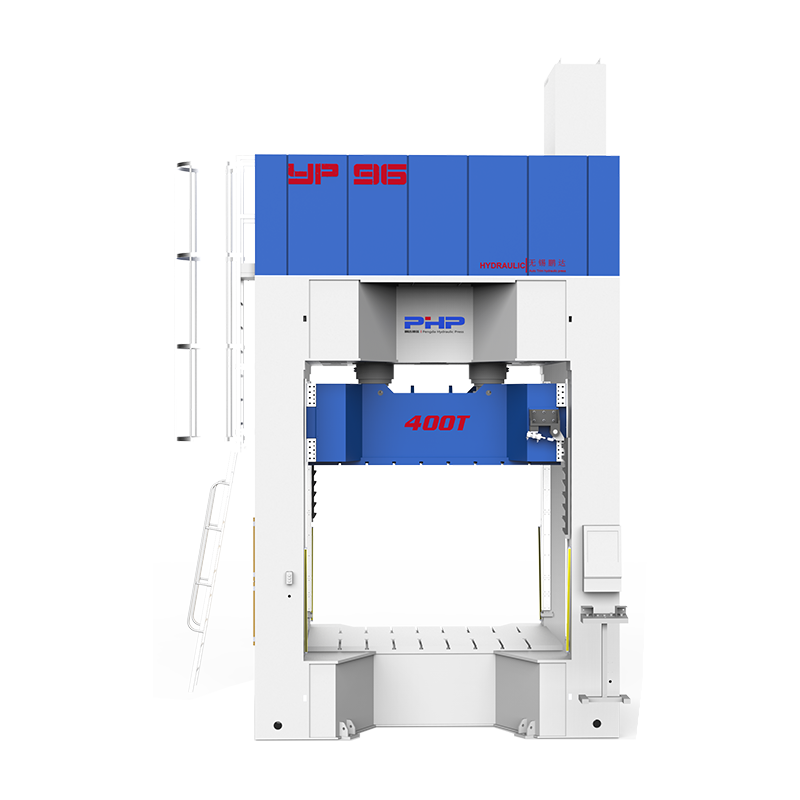
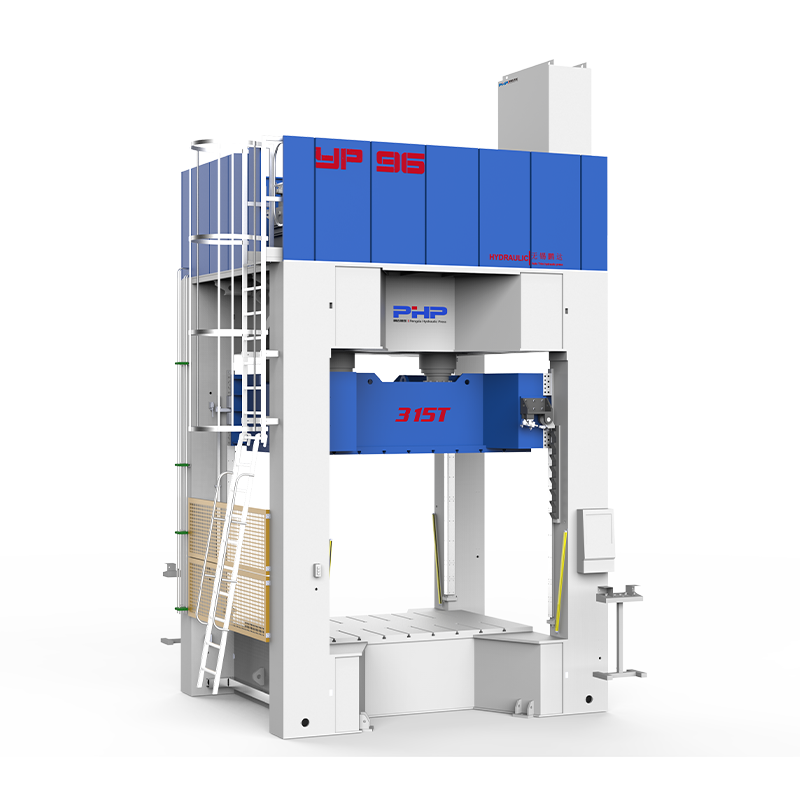
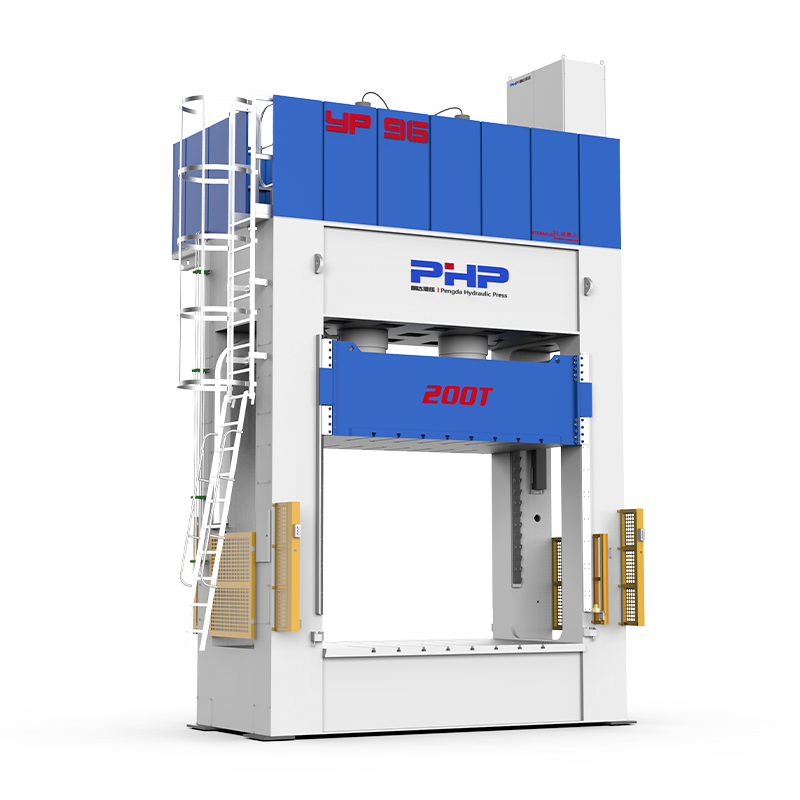


SMC Press Process Control
In SMC compression molding, pressure is often discussed as a single number: 100 bar, 160 bar, 1000 tons, or a specified molding pressure. In actual production, however, the maximum value alone tells only a small part of the story.
What matters is how pressure develops throughout the molding cycle: when resistance first appears, how rapidly pressure rises while the SMC flows, where peak force occurs, how stable pressure remains during cure, and how pressure is released before the mold opens.
Content
- 1 1. What Is an SMC Hydraulic Pressure Curve?
- 2 2. Hydraulic Pressure Is Not the Same as Molding Pressure
- 3 3. Stage 1: Fast Approach Should Create Little Process Pressure
- 4 4. Stage 2: Initial Contact and the Squish Phase
- 5 5. Stage 3: Pressure Build-Up During SMC Flow
- 6 6. Closing Velocity and Pressure Must Be Optimized Together
- 7 7. Pressure Development Influences Air and Void Behavior
- 8 8. Stage 4: Peak Pressure and Final Cavity Filling
- 9 9. Peak Pressure and Holding Pressure Are Not Always the Same
- 10 10. Pressure Stability Matters More Than Peak Pressure Alone
- 11 11. Pressure Drift During Hold Can Be a Diagnostic Signal
- 12 12. Decompression Is Also Part of the Pressure Curve
- 13 13. What Can an Abnormal Pressure Curve Tell You?
- 14 14. Compare Pressure with Platen Position, Not Only Time
- 15 15. Build a Golden Pressure Curve for Stable Production
- 16 16. Do Not Optimize the Pressure Curve Independently
- 17 17. Practical Example: Stable Cycle vs Abnormal Cycle
- 18 18. What Should a Modern SMC Press Control System Record?
- 19 19. SMC Pressure Curve Optimization Checklist
- 20 Control the Pressure Curve, Not Just the Maximum Pressure
- 21 SMC Hydraulic Press Solutions from Wuxi PengdaHZ
- 22 Frequently Asked Questions
- 22.1 What is a hydraulic pressure curve in SMC molding?
- 22.2 What is the difference between hydraulic pressure and SMC molding pressure?
- 22.3 When should pressure begin to rise during SMC compression molding?
- 22.4 Why does SMC molding pressure rise suddenly?
- 22.5 Does higher molding pressure always reduce SMC porosity?
- 22.6 How does closing speed affect the SMC pressure curve?
- 22.7 What is the difference between peak pressure and holding pressure?
- 22.8 What causes pressure fluctuation during the hold stage?
- 22.9 Why should pressure be monitored against platen position?
- 22.10 What is a golden pressure curve?
1. What Is an SMC Hydraulic Pressure Curve?
A pressure curve describes how hydraulic pressure or press force changes over time, platen position or both during a molding cycle.
A simplified SMC molding sequence may look like this:
Fast Approach→Charge Contact→SMC Flow→Pressure Build-Up→Peak / Hold→Cure→Decompression→Opening
Simplified Pressure Development
The pressure curve is not generated by the hydraulic system alone. It is the result of the press pushing against changing resistance inside the mold.
That resistance depends on factors such as:
- SMC viscosity and material formulation;
- charge thickness and coverage;
- fiber content;
- mold temperature;
- closing velocity;
- mold geometry;
- remaining cavity gap;
- degree of cavity filling.
2. Hydraulic Pressure Is Not the Same as Molding Pressure
One of the most common misunderstandings in hydraulic press discussions is treating system pressure and molding pressure as the same value.
| Parameter | Meaning |
| Hydraulic Pressure | Pressure inside the hydraulic cylinder or hydraulic circuit |
| Press Force | Total force generated by the hydraulic cylinders |
| Nominal Molding Pressure | Press force divided by the projected molded area |
| Local Cavity Pressure | Actual pressure acting at a specific location inside the mold |
Press Force = Hydraulic Pressure × Effective Cylinder Area
Nominal Molding Pressure ≈ Press Force ÷ Projected Molding Area
These formulas are useful for machine sizing, but pressure inside the SMC material is not perfectly uniform.
Local pressure can vary because of ribs, bosses, long flow paths, charge placement, friction, temperature differences and cavity geometry.
200 bar hydraulic pressure does not mean every location in the SMC part experiences 200 bar.
Hydraulic pressure, press force and local cavity pressure should be treated as related but different engineering quantities.
3. Stage 1: Fast Approach Should Create Little Process Pressure
During fast approach, the upper platen is moving toward the mold but the SMC charge has not yet generated significant resistance.
Hydraulic pressure during this stage is mainly associated with moving the platen, tooling and hydraulic components against gravity, friction and system resistance.
This creates an important diagnostic opportunity.
Unexpected pressure before the expected charge-contact position should be investigated.
Possible causes include:
- mold interference;
- incorrect mold installation;
- foreign material between mold surfaces;
- guide-pin interference;
- incorrect charge thickness;
- unexpected mechanical resistance.
This is one reason why recording platen position together with pressure is more useful than recording pressure alone.
4. Stage 2: Initial Contact and the Squish Phase
Once the moving mold contacts the SMC charge, the material begins to compress through its thickness.
This initial stage is often described as a squish phase. The stacked SMC sheets compress, material begins to move laterally and trapped air is displaced.
01
Thickness Compression
The charge begins to compact as the mold gap decreases.
02
Initial Lateral Flow
Material starts moving toward unfilled regions of the cavity.
03
Air Movement
Air between charge layers and ahead of the flow front must move toward available vents.
During this stage, pressure would normally begin to increase progressively.
An unusually steep pressure rise can indicate that the material is resisting flow earlier than expected.
Possible reasons include:
- closing velocity too high;
- charge coverage too large;
- charge too thick;
- material viscosity higher than normal;
- mold temperature too low;
- restricted flow geometry.
5. Stage 3: Pressure Build-Up During SMC Flow
After initial compression, the SMC must flow across the cavity toward unfilled regions.
At this stage, press force is doing more than simply pressing the two mold halves together. It is also driving a highly fiber-filled thermoset compound through the available cavity space.
Pressure should develop with material flow—not fight against it.
Pressure Rises Too Fast
- material flow may become unstable;
- flash risk may increase;
- fiber orientation may change more aggressively;
- air can become trapped;
- local loads can rise rapidly.
Pressure Rises Too Slowly
- cavity filling may remain incomplete;
- compaction may be insufficient;
- voids may remain;
- material can begin curing before complete filling.
The ideal pressure-development rate therefore depends on the SMC formulation, charge pattern, mold geometry, temperature and closing-speed profile.
6. Closing Velocity and Pressure Must Be Optimized Together
Pressure and platen velocity should not be treated as independent settings.
If the moving platen closes faster, the SMC must deform and flow faster. Depending on its viscosity and fiber structure, resistance can increase rapidly.
Profile A
Aggressive Closing
A sudden resistance increase can produce a sharp pressure spike and unstable material flow.
Profile B
Controlled Closing
A controlled transition can produce a smoother pressure increase and more repeatable filling.
This is why an SMC press commonly benefits from multiple motion stages rather than one fixed closing speed.
Fast Approach→Speed Reduction→Controlled Material Flow→Pressure Build-Up
7. Pressure Development Influences Air and Void Behavior
SMC contains air between charge layers and can also trap air at advancing flow fronts.
During compression, voids may shrink, move through the material, migrate toward the flow front or vents, or become trapped in local regions.
Pressure is therefore part of void control, but simply maximizing final pressure is not a complete solution.
Pressure Development+Material Flow+Venting+Temperature=Void Control
Poor interaction between these factors can contribute to:
- pinholes;
- internal porosity;
- blisters;
- paint defects;
- local surface variation.
8. Stage 4: Peak Pressure and Final Cavity Filling
As the cavity approaches full filling and the mold gap approaches its final position, material movement decreases and press force increasingly contributes to final consolidation.
Peak pressure should therefore be high enough to produce the required filling and compaction—but not simply as high as the machine can generate.
If Peak Pressure Is Too Low
- small features may remain incomplete;
- compaction may be insufficient;
- porosity may remain;
- part thickness may vary.
If Peak Pressure Is Too High
- flash may increase;
- mold loading increases;
- material may be displaced excessively;
- tooling and press are subjected to unnecessary load.
The correct peak pressure is the pressure required by the part and process—not the maximum pressure available from the press.
9. Peak Pressure and Holding Pressure Are Not Always the Same
Peak pressure describes the maximum pressure reached during the cycle. Holding pressure describes the pressure maintained during the subsequent compaction and cure stage.
Depending on the material and process recipe, these values may be similar or may intentionally differ.
| Pressure Stage | Main Function |
| Pressure Build-Up | Supports material flow and progressive cavity filling |
| Peak Pressure | Provides the maximum required force near final filling or compaction |
| Holding Pressure | Maintains closure and compaction during the validated cure stage |
During holding, the press should maintain sufficiently stable force while the resin continues to cure and the component develops its final shape.
10. Pressure Stability Matters More Than Peak Pressure Alone
Two hydraulic presses can reach the same maximum tonnage while delivering very different production consistency.
Stable Hold
Pressure remains within a controlled range during the holding stage.
Unstable Hold
Repeated pressure fluctuation may indicate control, hydraulic or process instability.
Excessive pressure fluctuation can contribute to:
- cycle-to-cycle thickness variation;
- flash variation;
- dimensional inconsistency;
- unstable surface appearance;
- difficulty maintaining a repeatable process window.
When evaluating an SMC press, buyers should therefore consider not only maximum force but also pressure controllability, repeatability and actual process-data capability.
11. Pressure Drift During Hold Can Be a Diagnostic Signal
A pressure curve that gradually or unexpectedly falls during the holding stage deserves investigation.
Possible causes can include:
- hydraulic leakage;
- internal valve leakage;
- cylinder-seal leakage;
- pump-control behavior;
- pressure-control settings;
- changing resistance as the material cures;
- tool or structural movement.
Pressure drift alone does not identify the root cause. It is a diagnostic clue that should be evaluated together with position, temperature, hydraulic condition and molded-part results.
12. Decompression Is Also Part of the Pressure Curve
Pressure management does not end when cure is complete.
Opening a highly loaded mold immediately after the holding stage can introduce unnecessary mechanical and hydraulic shock.
A controlled sequence may instead follow:
1 Hold Pressure
→
2 Controlled Decompression
→
3 Pressure Release
→
4 Mold Opening
The appropriate decompression profile depends on press architecture, tool size, part geometry and the molding process.
13. What Can an Abnormal Pressure Curve Tell You?
Once a stable production curve has been established, changes in its shape can provide useful troubleshooting information.
| Pressure Curve Symptom | Possible Areas to Investigate |
| Pressure rises earlier than normal | Charge too thick, excessive charge weight, incorrect placement, mechanical interference |
| Sharp pressure spike | Closing speed too high, restricted flow, local interference, high material resistance |
| Pressure builds more slowly than normal | Low charge, lower resistance, incomplete filling or changed material rheology |
| Peak pressure significantly higher | Excess charge, restricted flow, lower material temperature or incorrect setting |
| Target pressure cannot be reached | Hydraulic issue, leakage, insufficient available force or control problem |
| Hold pressure falls continuously | Leakage, valve behavior, sealing issue or changing process resistance |
| Pressure oscillates during hold | Control instability, hydraulic response or inappropriate tuning |
| Curve varies significantly cycle to cycle | Charge, temperature, material or machine variation |
A pressure curve is a diagnostic clue—not a complete diagnosis.
Similar curve changes can come from the material, mold, hydraulic system, temperature or charge preparation, so additional process data should be checked before changing the recipe.
14. Compare Pressure with Platen Position, Not Only Time
Pressure-versus-time data is useful, but pressure-versus-position can reveal even more about the actual molding process.
If pressure starts rising at approximately the same platen position on every acceptable cycle, that position can become a valuable reference for material contact and flow behavior.
| Example Position | Velocity | Pressure Behavior | Likely Process Stage |
| 500 mm | Fast | Low | Approach |
| 120 mm | Reduced | Beginning to rise | Charge contact |
| 80 mm | Controlled | Medium | Material flow |
| 15 mm | Low | High | Final filling / compaction |
| Final position | Hold | Stable | Cure stage |
Position + Velocity + Pressure + Time provides a much clearer picture than any one parameter alone.
The values above are illustrative only. Actual positions, velocities and pressures depend on the press, mold and part.
15. Build a Golden Pressure Curve for Stable Production
Once a mold consistently produces conforming parts, its successful cycle can be recorded as a reference or “golden cycle.”
Reference 01 Contact Position Where pressure begins to rise
Reference 02 Pressure Ramp How quickly force develops
Reference 03 Peak Pressure Maximum required force
Reference 04 Hold Stability Pressure behavior during cure
Reference 05 Decompression How pressure is released
Future production cycles can then be compared with this known-good reference.
For example:
- pressure begins rising 20 mm earlier than usual;
- peak pressure is unusually high;
- flow stage takes longer;
- hold pressure becomes unstable;
- decompression behavior changes.
These deviations can prompt investigation before large quantities of nonconforming parts are produced.
16. Do Not Optimize the Pressure Curve Independently
A pressure curve cannot be optimized without considering the rest of the SMC process.
Charge Weight+Charge Coverage+Temperature+Closing Velocity+Position+Pressure
Charge Weight
More material can cause pressure to rise earlier or increase the force required to reach final cavity closure.
Charge Coverage
A large initial coverage area generally requires less lateral flow than a smaller charge covering only part of the cavity.
Mold Temperature
Temperature changes SMC rheology and cure behavior. A colder-than-normal mold can therefore change the pressure response even when hydraulic settings remain unchanged.
Closing Velocity
Faster compression changes the rate at which the material must deform and can change both peak resistance and pressure-development shape.
17. Practical Example: Stable Cycle vs Abnormal Cycle
Cycle A
Stable Production Cycle
- contact position remains repeatable;
- pressure rises progressively;
- peak pressure remains within the normal window;
- holding pressure is stable;
- decompression is controlled.
Typical result: complete fill, stable thickness, controlled flash and repeatable surface quality.
Cycle B
Abnormal Production Cycle
- pressure begins rising earlier;
- a sharp pressure spike appears;
- peak force exceeds the normal range;
- flash increases on the molded part.
First checks: charge weight, charge location, mold temperature, closing velocity and mechanical interference.
This comparison demonstrates why pressure curves can be more useful than checking only whether the machine eventually reaches the target pressure.
18. What Should a Modern SMC Press Control System Record?
For process development and troubleshooting, useful press data can include:
Depending on the machine configuration and control system, additional useful functions can include:
- saved mold recipes;
- pressure and position curve display;
- reference-cycle comparison;
- upper and lower process limits;
- mold ID and recipe ID;
- production batch records.
These functions turn the press from a force-producing machine into a source of process information.
19. SMC Pressure Curve Optimization Checklist
| Question | Why It Matters |
| Where does pressure first begin to rise? | Helps identify material-contact behavior |
| How quickly does pressure increase? | Indicates changing material-flow resistance |
| Is closing velocity repeatable? | Velocity directly affects pressure development |
| Where is peak pressure reached? | Helps understand final filling and compaction |
| Is peak pressure repeatable? | Important for cycle-to-cycle stability |
| Is holding pressure stable? | Supports repeatable compaction and cure |
| Does pressure drift during hold? | May indicate hydraulic or process variation |
| Is decompression controlled? | Helps avoid unnecessary mechanical shock |
| Does the curve change between material lots? | Can reveal changes in material behavior |
| Can pressure curves be compared with part quality? | Enables more systematic process monitoring |
Control the Pressure Curve, Not Just the Maximum Pressure
A useful SMC pressure curve shows much more than whether a hydraulic press can reach its rated tonnage.
It can show when the material begins to resist compression, how pressure develops as the SMC flows, when the cavity approaches full filling, how stable compaction remains during cure and how force is released before mold opening.
Pressure Curve = Process Information
When pressure is evaluated together with platen position, velocity, temperature and part quality, it becomes a powerful tool for process development, troubleshooting and production repeatability.
SMC Hydraulic Press Solutions from Wuxi PengdaHZ
Wuxi PengdaHZ Intelligent Equipment Co., Ltd. develops hydraulic press solutions for SMC, BMC and composite compression molding applications.
Depending on project requirements, an SMC press control system can be configured around multi-stage motion control, pressure control, position-based transitions, holding-pressure control, controlled decompression, mold recipes and process-data monitoring.
For new equipment evaluation, useful information includes the part drawing, projected molding area, SMC material, mold dimensions, required molding force, target cycle time and existing process data where available.
Visit wuxipd.com for more information about customized SMC compression molding presses and composite molding systems.
Frequently Asked Questions
What is a hydraulic pressure curve in SMC molding?
It is a record of how hydraulic pressure or press force changes during the molding cycle. It can be displayed against time, platen position or both.
What is the difference between hydraulic pressure and SMC molding pressure?
Hydraulic pressure exists inside the press cylinder or hydraulic circuit. Press force is generated from hydraulic pressure acting on the cylinder area, while nominal molding pressure relates that force to the projected molded area. Actual local cavity pressure can vary throughout the mold.
When should pressure begin to rise during SMC compression molding?
Significant process pressure normally begins developing after the mold contacts and starts compressing the SMC charge. The exact contact position depends on mold geometry, charge thickness and setup.
Why does SMC molding pressure rise suddenly?
A sharp rise can result from excessive closing speed, high material resistance, excessive charge, restricted flow, low material temperature or mechanical interference.
Does higher molding pressure always reduce SMC porosity?
No. Porosity is influenced by pressure development, material flow, venting, temperature and charge design. Increasing final pressure alone does not guarantee that trapped air can escape.
How does closing speed affect the SMC pressure curve?
Closing speed changes how quickly the material must deform and flow. A more aggressive closing profile can create a steeper pressure rise, while controlled closing can provide more gradual pressure development.
What is the difference between peak pressure and holding pressure?
Peak pressure is the maximum pressure reached during the cycle. Holding pressure is the pressure maintained during the subsequent compaction and cure stage. They do not necessarily need to be identical.
What causes pressure fluctuation during the hold stage?
Possible causes include hydraulic-control behavior, valve response, leakage, seal condition, pump control, material behavior or inappropriate control tuning.
Why should pressure be monitored against platen position?
Position data helps identify where material contact, pressure build-up and final compaction occur. A pressure change at an unexpected position can reveal process or mechanical variation that may be difficult to identify from time data alone.
What is a golden pressure curve?
A golden curve is a reference pressure, position and velocity profile recorded during a validated production cycle. Future cycles can be compared with it to identify deviations and support troubleshooting.