English
 中文简体
中文简体 Español
 Português
 Deutsch
 русский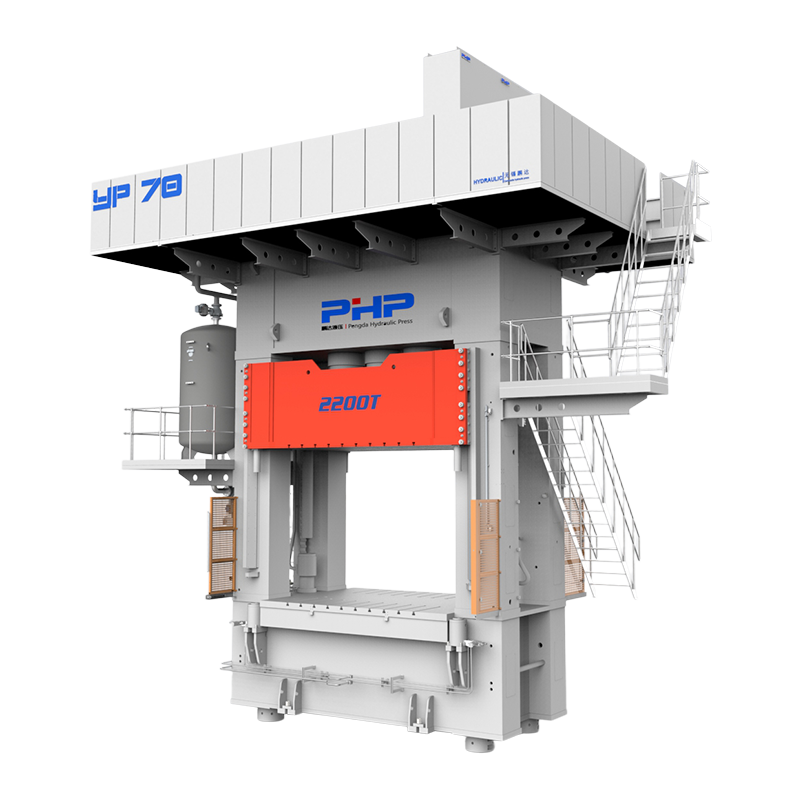
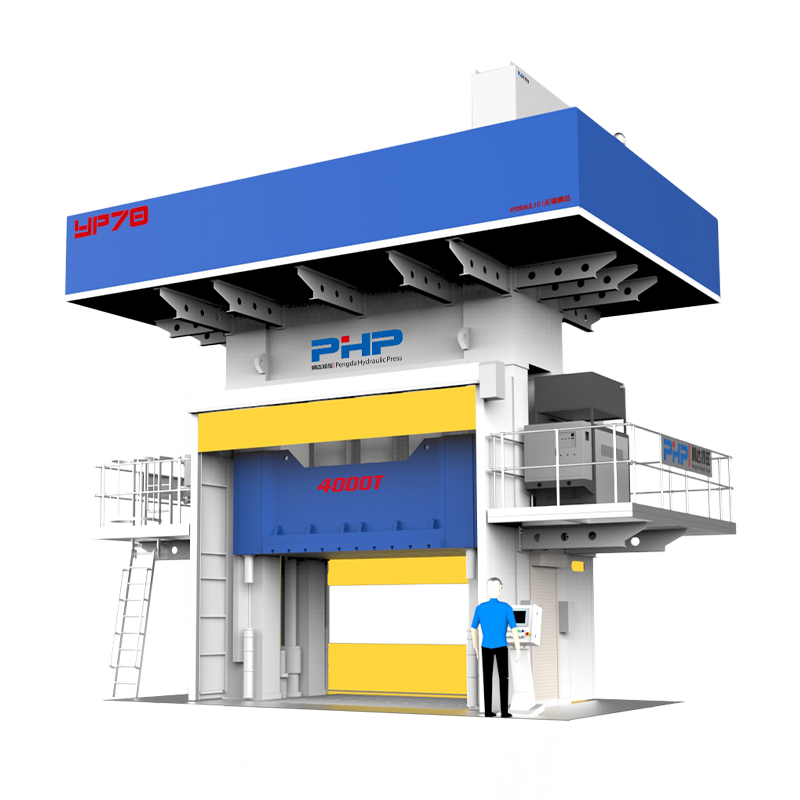
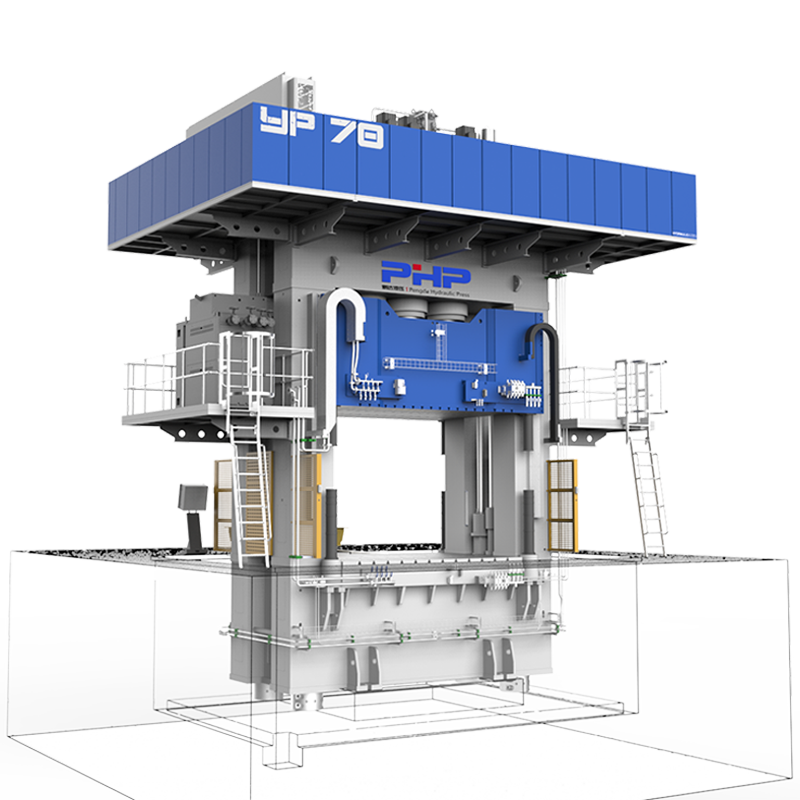
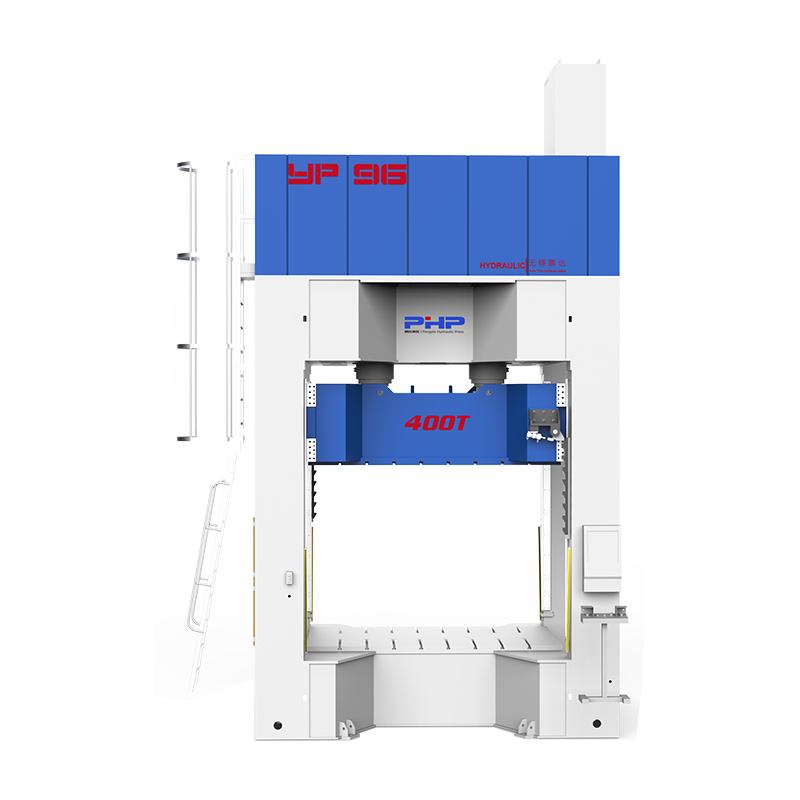
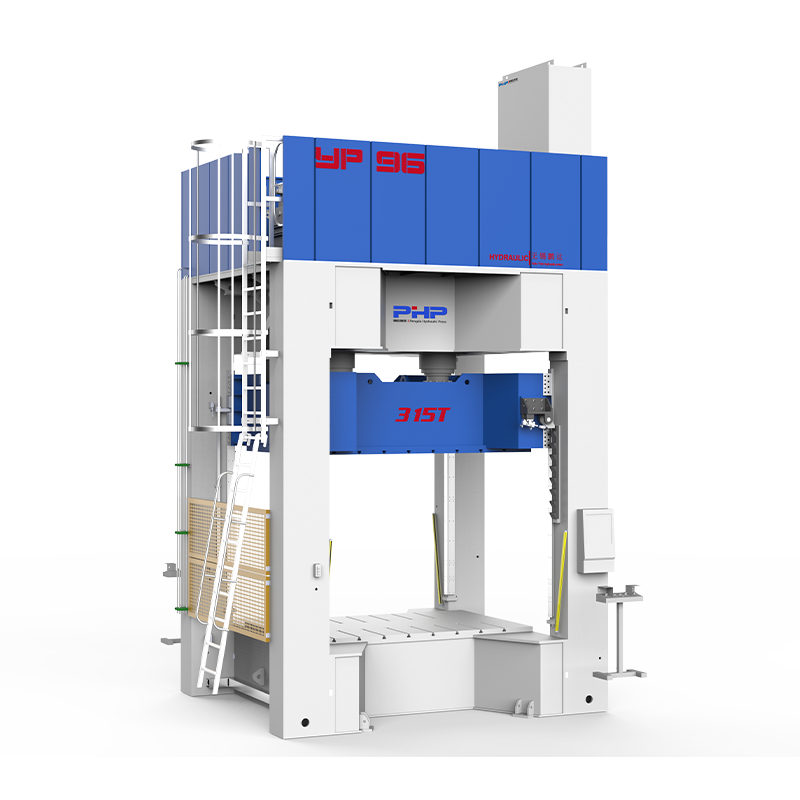
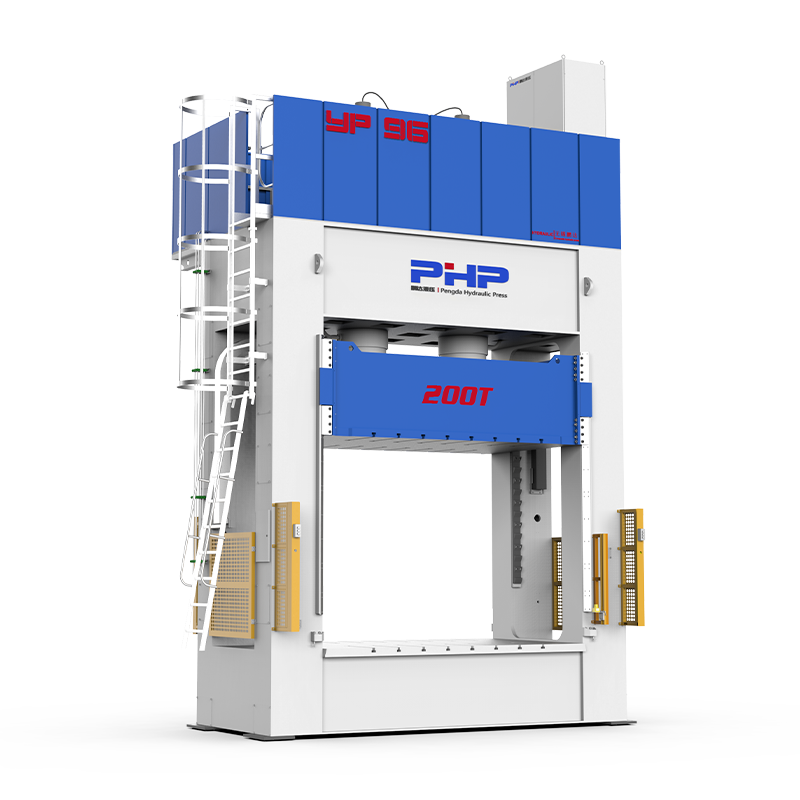

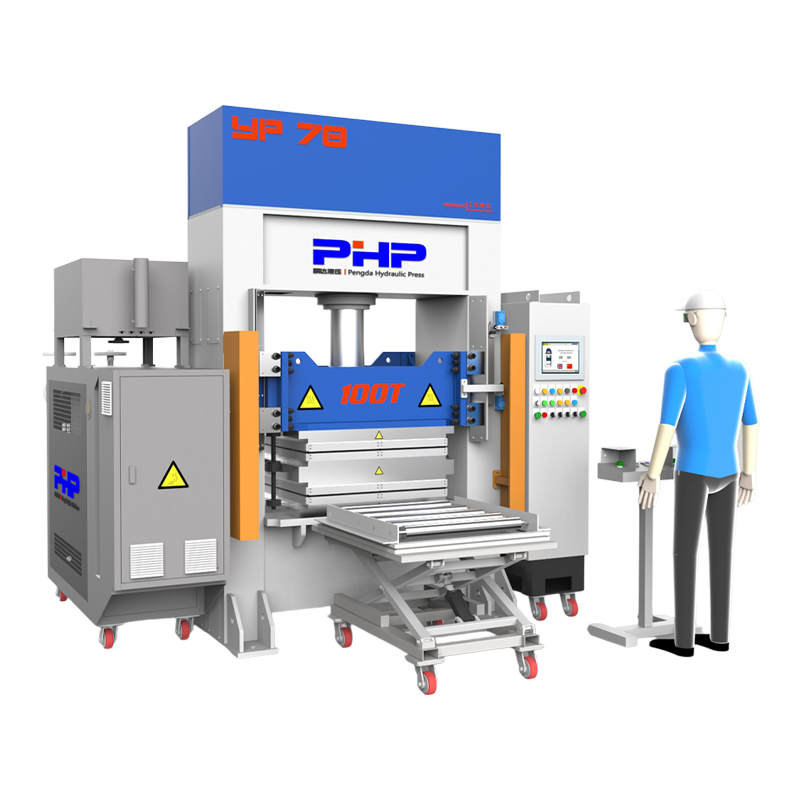
CNC trimming is generally better suited to complex geometries, lower production volumes, prototypes, and SMC parts that may still require engineering changes. A dedicated trim press becomes increasingly attractive when the component design is stable, production volumes are high, and a short takt time is required.
For many automotive and truck SMC components, however, the most economical solution is not necessarily one process or the other. A hybrid production cell can use a trim press for high-speed perimeter and opening removal while retaining CNC machining for critical holes or complex features.
SMC parts frequently leave the compression molding process with flash or with features that still require holes, windows, edge finishing, or dimensional correction. Choosing the secondary trimming process therefore affects not only edge quality but also tooling investment, labor requirements, production capacity, automation, and total cost per finished component.
This guide from Wuxi PengdaHZ Intelligent Equipment Co., Ltd. compares CNC trimming and trim presses from an engineering and production perspective.
Content
- 1 1. CNC Trimming vs Trim Press: How the Two Processes Work
- 2 2. Precision, Tolerances and Tooling Requirements
- 3 3. Cycle Time, Throughput and ROI
- 4 4. Automation, Maintenance and Safety Considerations
- 5 5. When a Hybrid CNC + Trim Press Strategy Makes Sense
- 6 6. How to Choose Between CNC Trimming and a Trim Press
- 7 FAQ: CNC Trimming vs Trim Press for SMC Parts
- 8 Discuss Your SMC Trimming Requirements with PengdaHZ
1. CNC Trimming vs Trim Press: How the Two Processes Work
In CNC trimming, a molded SMC component is positioned on a dedicated fixture while a router, spindle, or robotic cutting system follows a programmed path. The same station may trim the outside profile, machine slots, produce holes, and remove local material from difficult areas.
The major advantage is flexibility. If the edge geometry changes, manufacturers can often modify the CNC program and, where necessary, the fixture instead of building a completely new trim die. This makes CNC particularly useful during prototype production, product launch, low- and medium-volume manufacturing, and multi-model production.
SMC machining nevertheless presents specific challenges. Because the cured material normally contains reinforcing fibers, the cutter is working through both a polymer matrix and abrasive reinforcement. As tool condition deteriorates, manufacturers may see exposed fibers, fuzzing, fiber pull-out, chipped edges, local matrix damage, or increasing cutting forces.
A trim press takes a different approach. The molded component is located inside dedicated trimming tooling, and the press applies the required force to remove flash, cut the perimeter, or punch openings. Several features can often be processed during a single press cycle.
| Process Factor | CNC Trimming | Trim Press |
| Production flexibility | High | Lower once the die is completed |
| Engineering changes | Usually easier to accommodate | May require die modification |
| Complex 3D contours | Well suited to robotic or multi-axis CNC | Possible, but tooling becomes more complex |
| Cycle time | Depends on total cutting path | Potentially very short for stable geometry |
| Initial dedicated tooling | Generally lower | Generally higher |
| High-volume unit cost | Can be limited by machining time | Can become lower once tooling is amortized |
For exterior body panels, truck components, structural covers, battery-related housings, and other large SMC components, geometry must also be considered. A thin unsupported edge may vibrate during CNC machining, while an inadequately supported part can crack or break out during press trimming.
2. Precision, Tolerances and Tooling Requirements
It is tempting to say that CNC is the “high-precision” option and a trim press is the “high-speed” option, but real production is more complicated.
CNC accuracy depends on the complete process chain: molded-part dimensional variation, warpage, datum selection, fixture rigidity, spindle condition, cutter deflection, cutting parameters, and tool wear all influence the finished dimension.
A manufacturer may, for example, specify a tighter positional tolerance for mounting holes than for a non-functional exterior perimeter. In that situation, CNC may be retained for the mounting features even if the main perimeter is processed by a trim press.
Important: machine positioning accuracy should not be confused with finished SMC part tolerance. The CNC machine may position far more accurately than the molded component itself can repeatedly locate in the fixture.
Cutting tools for SMC should be selected according to reinforcement type, glass-fiber content, wall thickness, required edge quality, and production quantity. Carbide tooling is common for composite machining, while coated or diamond-based solutions can be evaluated when abrasive wear becomes a major cost driver.
Instead of specifying that a cutter must always be replaced after a fixed number of components, a more reliable production strategy is to monitor:
- finished-edge quality;
- dimensional drift;
- spindle load;
- cutting forces;
- tool vibration;
- accumulated cutting distance.
How to Estimate Trim Press Force
A trim press should not be selected simply according to the projected area of the SMC component. The cutting perimeter, wall thickness, material behavior, hole quantity, die arrangement, and whether features are trimmed simultaneously all affect the required load.
Conceptual Cutting Force ≈ Effective Cutting Perimeter × Material Thickness × Effective Shear Resistance × Process Safety FactorPress selection should additionally consider die dimensions, daylight, stroke, bolster size, off-center loading, approach speed, return speed, automation space, and the required production takt.
When requesting equipment, the manufacturer should therefore provide the SMC grade, part drawing or 3D model, thickness, complete trim perimeter, hole and opening dimensions, target tolerance, annual quantity, and target cycle time.
3. Cycle Time, Throughput and ROI
The strongest economic advantage of CNC is usually its relatively low commitment to dedicated tooling. The strongest economic advantage of press trimming is the ability to process stable geometry quickly once the die has been developed.
Consider two hypothetical SMC components. Part A is produced at 4,000 units per year and undergoes design changes every few months. Part B is an automotive panel produced at 100,000 units per year with a stable design and a strict line takt.
Even if both components can technically be processed using either method, their economic requirements are very different.
| Production Condition | Process Usually Worth Evaluating First |
| Prototype parts | CNC |
| Frequent CAD revisions | CNC |
| Several variants on one line | CNC |
| Complex multi-axis contour | CNC / robotic trimming |
| Stable mass production | Trim press |
| Very short takt time | Trim press |
| High volume with several critical machined features | Hybrid press + CNC |
Calculate the Break-Even Volume Instead of Guessing
There is no universal annual quantity at which every manufacturer should change from CNC to a trim press. The decision should be calculated according to the actual component.
Break-Even Quantity = Additional Trim-Tooling Investment ÷ (CNC Cost per Part − Press-Trimming Cost per Part)Illustrative example only:
A company estimates that dedicated trim tooling requires US$70,000 more initial investment than its CNC fixture. Its calculated CNC trimming cost is US$6.00 per component, while automated press trimming is estimated at US$2.50 per component.
Per-part saving = US$3.50
Simple break-even quantity = US$70,000 ÷ US$3.50 = 20,000 components.
This does not mean 20,000 parts is an industry rule. Change the tooling cost, labor rate, cutter consumption, machine utilization, scrap rate, product lifetime, or takt requirement and the result changes immediately.
A proper ROI calculation should include equipment depreciation, fixtures or dies, direct labor, consumables, dust extraction, inspection, scrap, maintenance, downtime, automation, and the expected number of years the component will remain in production.
4. Automation, Maintenance and Safety Considerations
CNC and trim-press production cells can both operate with robotic loading and unloading, but their cell designs are different.
A CNC trimming cell may include a six-axis robot or multi-axis machining center, fixture identification, laser or vision-assisted positioning, automatic tool changing, spindle-load monitoring, tool-break detection, enclosed guarding, and a dust extraction system.
Dust management deserves particular attention when machining glass-fiber-reinforced SMC. An enclosed cell and suitable extraction system can help control airborne machining debris while reducing contamination of guides, fixtures, sensors, and other production equipment.
A trim-press cell may include:
- robotic transfer from the molding station;
- part orientation or cooling station;
- trim die and hydraulic press;
- scrap separation;
- finished-part inspection;
- automatic rejection of nonconforming components.
Maintenance also affects real throughput. CNC systems require cutter inspection, spindle maintenance, fixture checks, extraction-system maintenance, and monitoring of locating surfaces. Trim presses require inspection of cutting edges, guides, hydraulic systems, sensors, lubrication, die alignment, and guarding systems.
For U.S. installations, equipment layout should account for applicable machine-guarding requirements and hazardous-energy-control procedures. Lockout/tagout procedures become particularly important during maintenance, tool changes, die servicing, troubleshooting, or other work where stored hydraulic, electrical, pneumatic, or mechanical energy may present a hazard.
5. When a Hybrid CNC + Trim Press Strategy Makes Sense
Manufacturers do not always need to choose one technology exclusively. In many SMC programs, a hybrid approach offers a better balance between cycle time and flexibility.
Strategy 1: Trim Press First, CNC Finish Second
The trim press removes the stable perimeter, large openings, and major flash in a short cycle. CNC then machines only precision mounting holes, localized contours, or features that cannot easily be incorporated into the trim die.
This shortens CNC machine occupancy while avoiding an unnecessarily complicated die.
Strategy 2: CNC During Launch, Trim Press After Design Freeze
During prototype and pilot production, CNC handles the entire trimming operation. The manufacturer can modify the cutting program when engineers revise the CAD model.
After the component passes qualification and its geometry becomes stable, a dedicated trim die can be introduced for mass production.
This strategy helps avoid committing substantial tooling investment while a component is still changing.
Illustrative Automotive Panel Scenario
Consider an SMC truck exterior panel requiring perimeter trimming, four large ventilation openings, and six mounting holes.
During pilot production, CNC may complete all features because annual volume is low and several drawing revisions are expected. Once production increases, the perimeter and ventilation openings can be transferred to a trim press while CNC is retained for the mounting holes.
The result is not necessarily the lowest investment machine, but potentially a better total production system: shorter CNC machining time, more available CNC capacity, controlled critical dimensions, and faster high-volume trimming.
6. How to Choose Between CNC Trimming and a Trim Press
Before selecting equipment, manufacturers should answer the following questions:
| Decision Factor | Engineering Question |
| Annual quantity | How many qualified parts must be produced each year? |
| Program lifetime | How many years will the component remain in production? |
| Design maturity | Is the geometry frozen or are revisions still expected? |
| Part geometry | Is the trimming path planar, curved, or fully three-dimensional? |
| Feature quantity | How many holes, slots, windows, and cutouts are required? |
| Tolerance | Which dimensions actually control assembly or qualification? |
| Takt time | How many seconds are available for trimming? |
| Surface quality | Will the cut edge be visible, bonded, painted, sealed, or hidden? |
| Variants | Will the cell produce one part or many related parts? |
| Automation | Will handling be manual, semi-automatic, or fully robotic? |
CNC Best considered when flexibility, complex geometry, and engineering changes dominate.
Trim Press Best considered when geometry is stable and short takt time is critical to mass production.
Hybrid Worth evaluating when high production volume must be combined with several complex or high-precision secondary features.
FAQ: CNC Trimming vs Trim Press for SMC Parts
Discuss Your SMC Trimming Requirements with PengdaHZ
Wuxi PengdaHZ Intelligent Equipment Co., Ltd. provides hydraulic press and production-equipment solutions for SMC manufacturing applications.
If you are evaluating a trim press for an existing SMC component or comparing press trimming with CNC machining, the equipment decision should start with the part rather than with press tonnage alone.
For an initial engineering evaluation, prepare the following information:
- 2D drawing or 3D part model;
- SMC material specification;
- nominal and maximum wall thickness;
- required perimeter, holes, and openings;
- critical dimensional tolerances;
- annual production quantity;
- target cycle time;
- planned manual or robotic handling.
Based on these parameters, PengdaHZ can discuss suitable press capacity, tooling concepts, production-cell configuration, automation requirements, and whether dedicated trim-press equipment can provide an economic advantage for your SMC production program.
Contact PengdaHZ to request a preliminary SMC trimming and hydraulic press evaluation for your component.